Invisible Organization: The abyss (I mean hall closet)
As an Amazon Associate, I earn from qualifying purchases. This means I may earn a small commission when you click my linked images, at no extra cost to you. Clicking these links helps support my site and allows me to continue providing content. Thank you!
This all started with a single, innocent deck of Uno cards.
My husband and I were tidying the living room, again, because that’s apparently my full time, unpaid job when I’m home. I wipe counters. I load the dishwasher. I put toys away. I refold decorative throws that no one asked to be refolded. I fluff pillows that were fluffed an hour ago. I fix couch cushions like they’ve personally offended me. It’s constant. It’s excessive. It’s what happens when you’re an adult responsible for a space occupied by a child and multiple pets who do not share your values. I would like a refund.
At some point in this very thrilling loop, my husband holds up a pack of Uno cards and asks, “Where do these go?”
Now, logically, Uno cards belong in the basement. That’s where we store board games. Puzzles. All forms of family entertainment that only come out during a power outage or a sudden burst of optimism. So that should’ve been the answer. But I didn’t feel like going downstairs, because cleaning already felt like cardio, so instead I said, “Just put them in the hall closet.”
Without missing a beat, he replies, “That doesn’t make any sense. Why would we store Uno cards in the cleaning closet?”
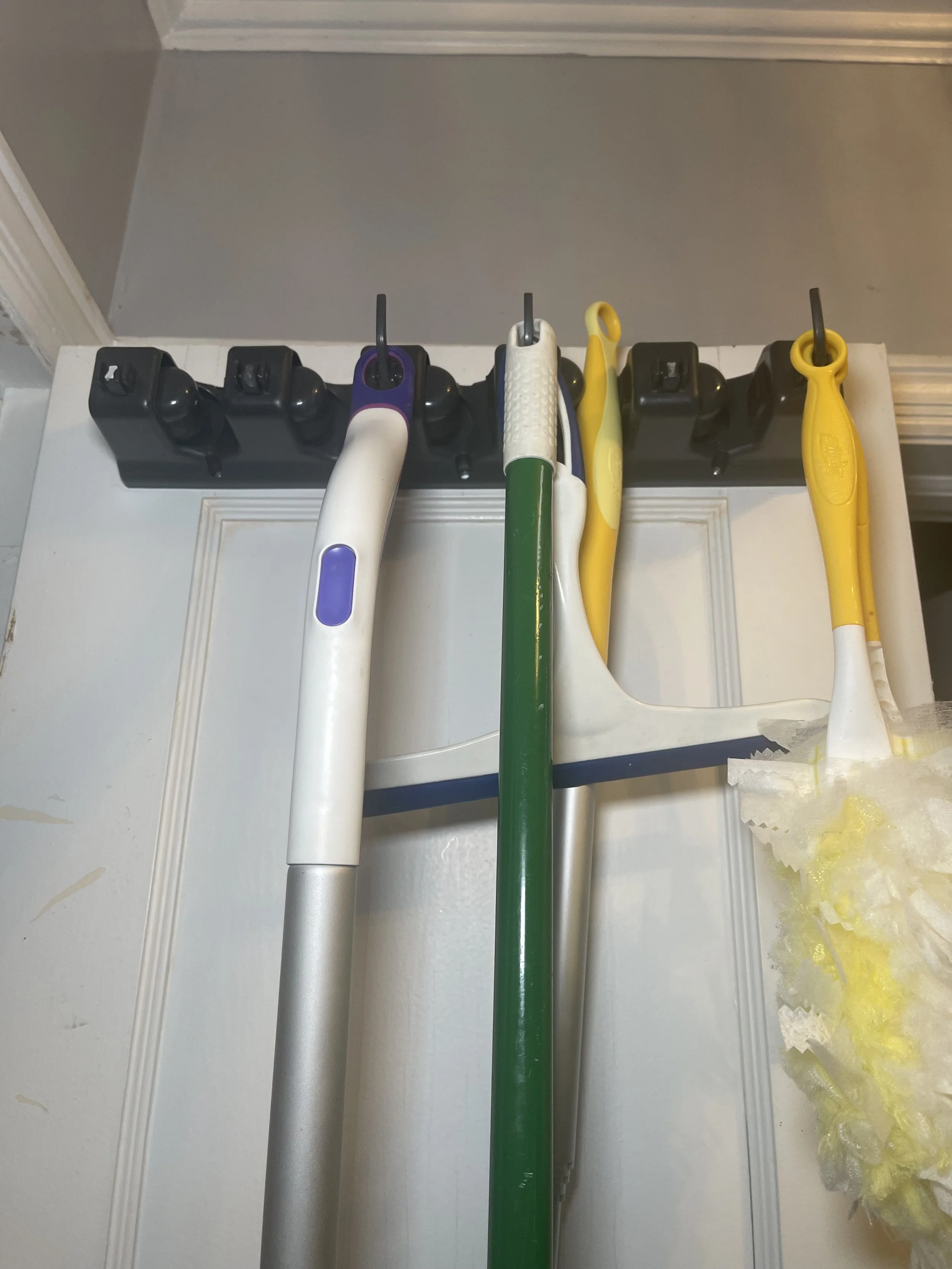
The cleaning closet.
Huh.
I knew we had a closet. I knew there was a door there. But suddenly it hit me: I had a closet with absolutely no identity. No purpose. No mission. Just vibes. And not even good ones.
That realization sent me spiraling, in the productive, organizational sense.
Our main-floor hall closet isn’t large, but what it does have is a serious case of multiple personality disorder. Over the years, we’ve tried to make it a coat closet… except it’s nowhere near the front door, and my daughter can’t reach a single thing inside it without assistance or a step stool and a dream. We’ve used it for toilet paper and paper towels. Spare jackets and sweaters. Snow boots. Cleaning supplies. Random things we didn’t feel like dealing with but also didn’t want to see.
It has exactly one shelf and one hanging rod. That’s it. Which means it’s wildly unhelpful for small items and deeply confusing for everything else. Nothing in there ever felt intentional, just shoved, stacked, leaned, or forgotten. Every time I opened it, something either fell out as a literal attack against my person, or silently judged me. I preferred the judging.
And here’s the kicker: the problem wasn’t the closet. The problem was that I had no idea what should live there.
I was trying to organize a space without understanding how we actually use the rooms around it. So the closet became a dumping ground instead of a solution. I kept buying bins and hooks and telling myself this time it would work, without ever stopping to ask what needed to be stored within easy reach on the main floor in the first place.
Here’s the part no one ever tells you about organizing: you can’t start with the storage.
I know. That’s the fun part. That’s where the bins and hooks and “life changing” organizers come in. But every time I tried to organize this closet first, I failed. Not because I chose the wrong containers, but because I had no idea what the closet was actually supposed to do.
So I stopped touching the closet.
Instead, I worked outward. I organized the living room. The kitchen. The nearby spaces we actually live in day to day. I paid attention to what we were constantly moving, where things naturally landed, and what kept floating around with no real home. I noticed what we reached for without thinking, and what we absolutely did not want to trek downstairs for.
That’s when the patterns showed up.
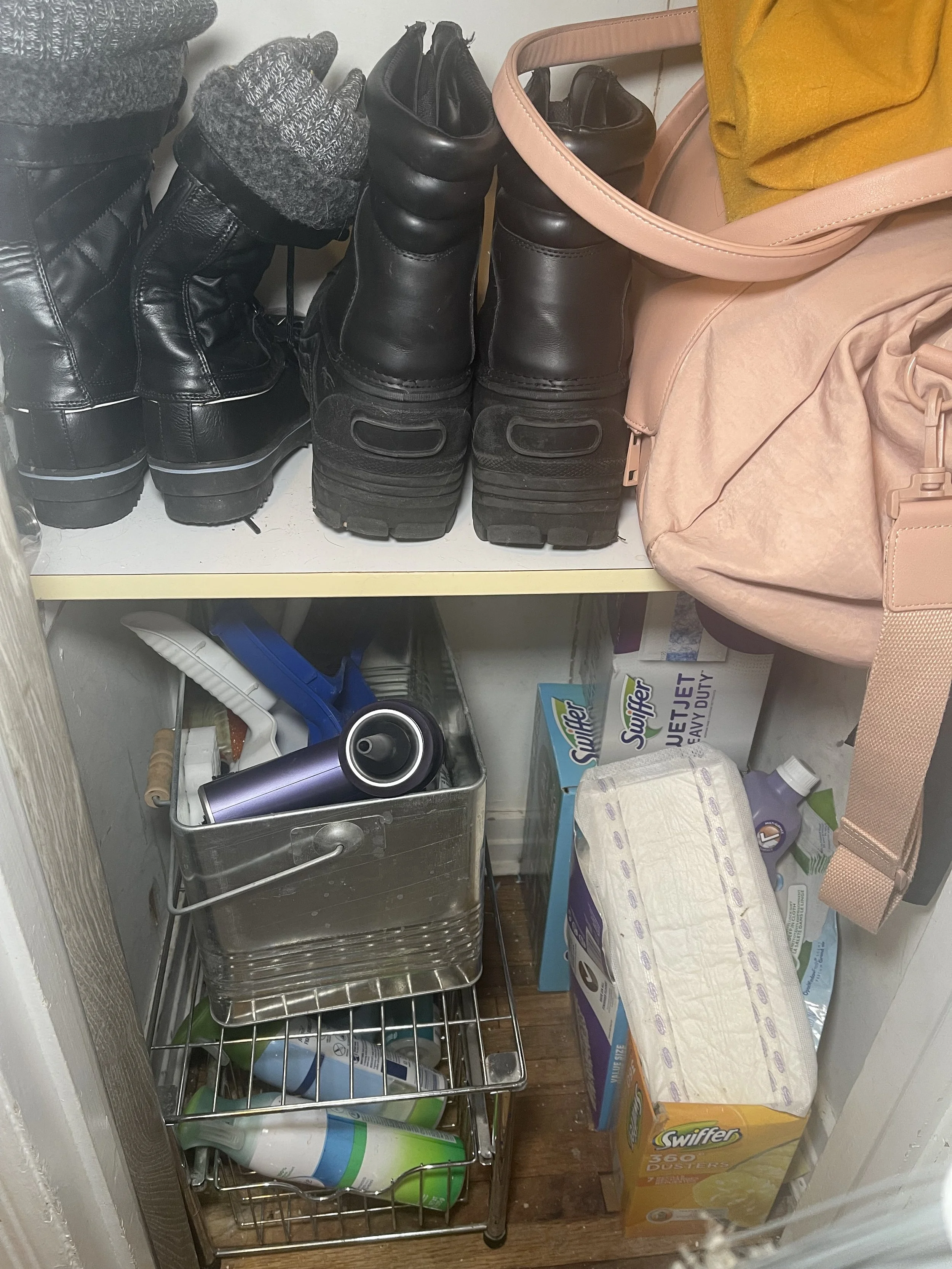
Home fragrances, my daughter’s swim bag, and a few cleaning essentials. Winter coats that aren’t warm enough for snow but still can be worn during the season, just not every day. All the extensions and parts that come with the fancy bagless upright vacuums practically needed their own bin. Swiffer pads and paper towels, things that get used around the first floor but I didn’t have space for in the kitchen.
Once I understood what belonged within arm’s reach on the main floor, the closet finally made sense. It wasn’t a coat closet. It wasn't a cleaning closet. It wasn’t extra storage for things we didn’t feel like dealing with.
It was a support closet.
A support closet is a space that exists to make the rooms around it function better, quietly and consistently.
A functional, hardworking space meant to quietly back up the rooms around it, without demanding attention or constant reorganizing. And once I knew that, choosing the right storage wasn’t overwhelming anymore. It was obvious.
Turns out, the best way to organize a closet is to ignore it long enough to figure out why you need it in the first place.
Once the purpose of the closet was clear, choosing storage stopped being overwhelming. I wasn’t buying bins and hoping they’d magically solve the problem. I wasn’t forcing categories that didn’t make sense. I was responding to real habits instead of aspirational ones.
This closet is not a cleaning supply warehouse. It’s not an overflow for random items that need to be put away somewhere out of sight in order for a room to look tidy. What this closet does is hold exactly what we need for quick, daily resets on the main floor. This includes electronic wipes, a handheld vacuum, and a couple of related essentials. Anything heavy duty or rarely used lives elsewhere. It’s here I will let you know, as I’m sure the suspense is killing you, that once I knew what the closet was for, I realized there needed to be a better spot for the Uno cards if they wanted to live upstairs. A storage ottoman in the living room where we were keeping some of my daughter’s toys seemed to be the perfect spot.
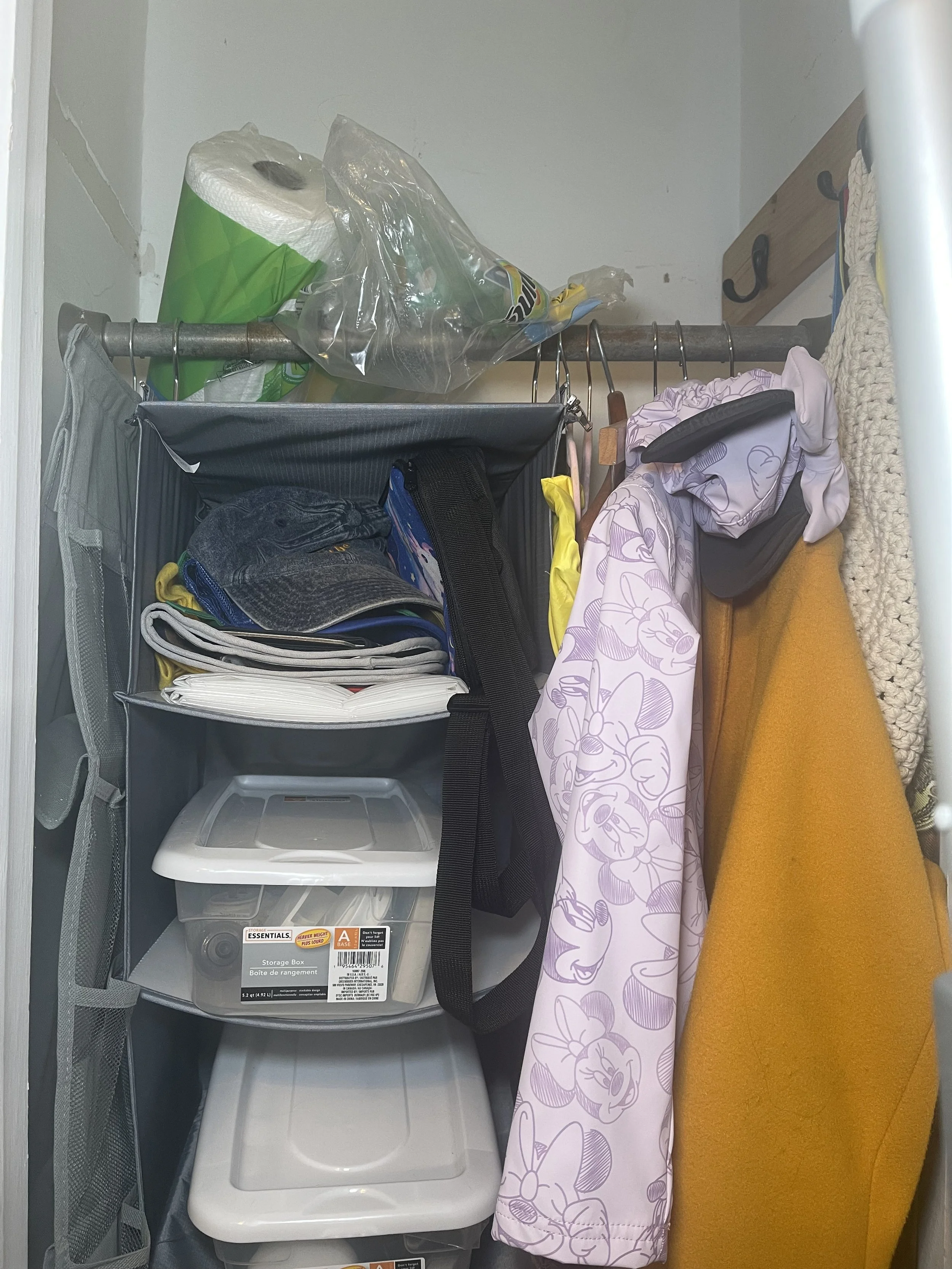
Invisible Organization is about proximity, not volume.
This is where Invisible Organization really earns its name. A small amount of backstock: paper towels, swiffer pads, lives here not because we can store it, but because it prevents constant trips and clutter elsewhere.
Everything has limits. Once the space is full, that’s the signal, not a suggestion.
Fewer categories. Fewer containers. Everything is easier to see, easy to reach, and easy to put back.
Invisible Organization doesn’t add more systems, it removes obstacles.
And that’s the lesson I keep coming back to: you don’t organize a closet first. You organize your life around it, and then the closet reveals exactly what it needs to be.
This closet didn’t become functional because I found the perfect bin or a magical organizing system. It became functional because I stopped asking it to be everything, and started asking it to do one job well.
Once the surrounding rooms were organized, once I understood what needed to live within arm’s reach, the storage choices became obvious. I didn’t need more containers. I needed the right ones. Fewer pieces, better suited to how we actually move through the space.
Every item in this closet is here because it earns its place. It’s used regularly. It’s easy to grab. And, most importantly, it’s easy to put back. That’s the difference between a system that looks good once and a system that works long term. The easier it is for you to remain disciplined about its constant upkeep, the more functional it becomes over time.
If you’re tackling your own hall closet, support closet, or any space that’s quietly holding your house together, I always recommend starting with the function first. Figure out what the space needs to support, and only then bring in storage that helps, not complicates.
Below, I’ve linked storage pieces that worked for this closet and why I chose them. Not because they’re trendy, but because they made the space easier to live with. Consider them tools, not décor.
Invisible Organization isn’t flashy, but it’s the reason everything else feels calmer.
As an Amazon Associate, I earn from qualifying purchases. This means I may earn a small commission when you click my linked images, at no extra cost to you. Clicking these links helps support my site and allows me to continue providing content. Thank you!
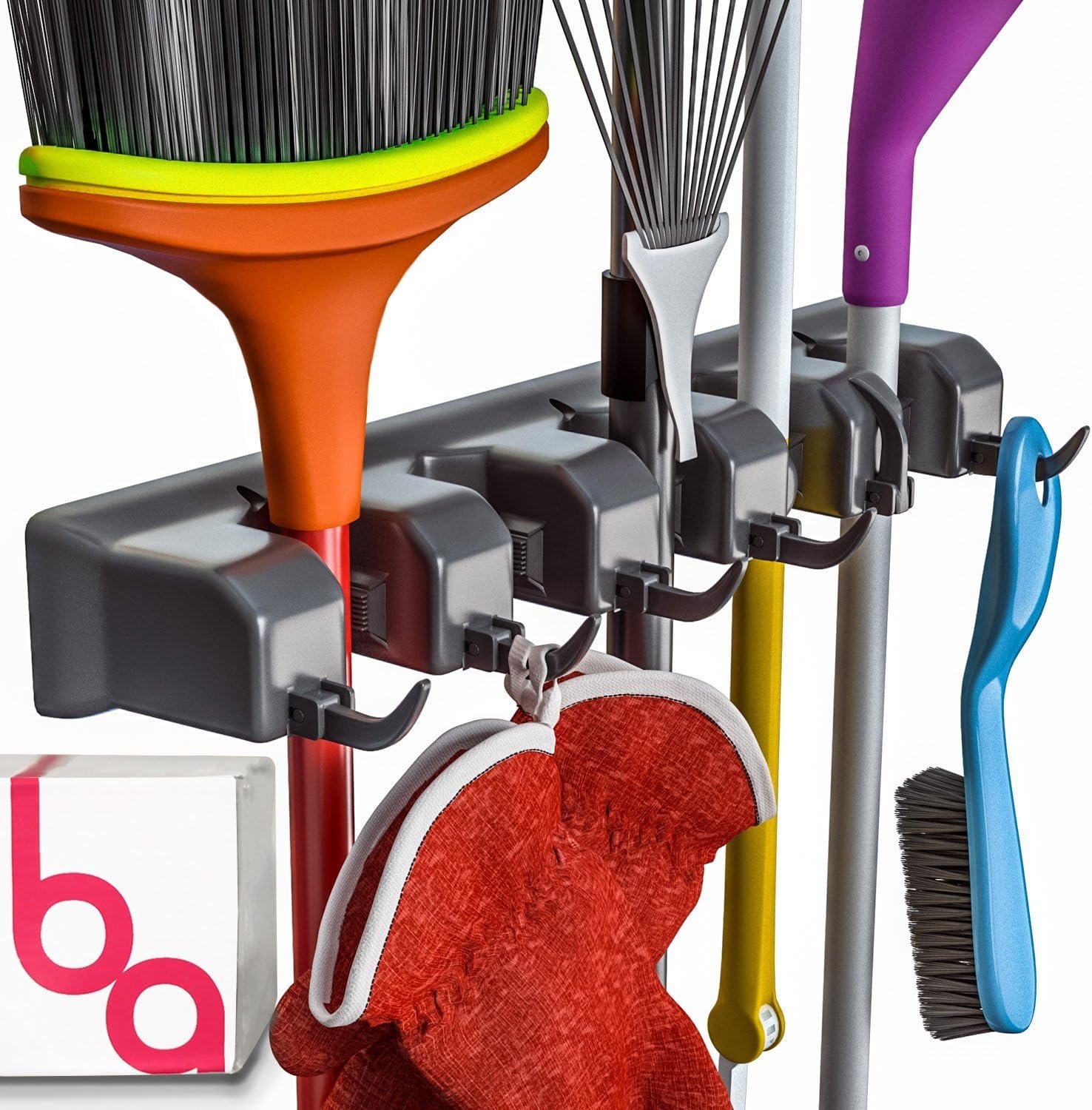
Get these things off the floor, and utilize the back of the door! This opens up so much closet space, and keeps mops and brooms from falling out when you open the door.
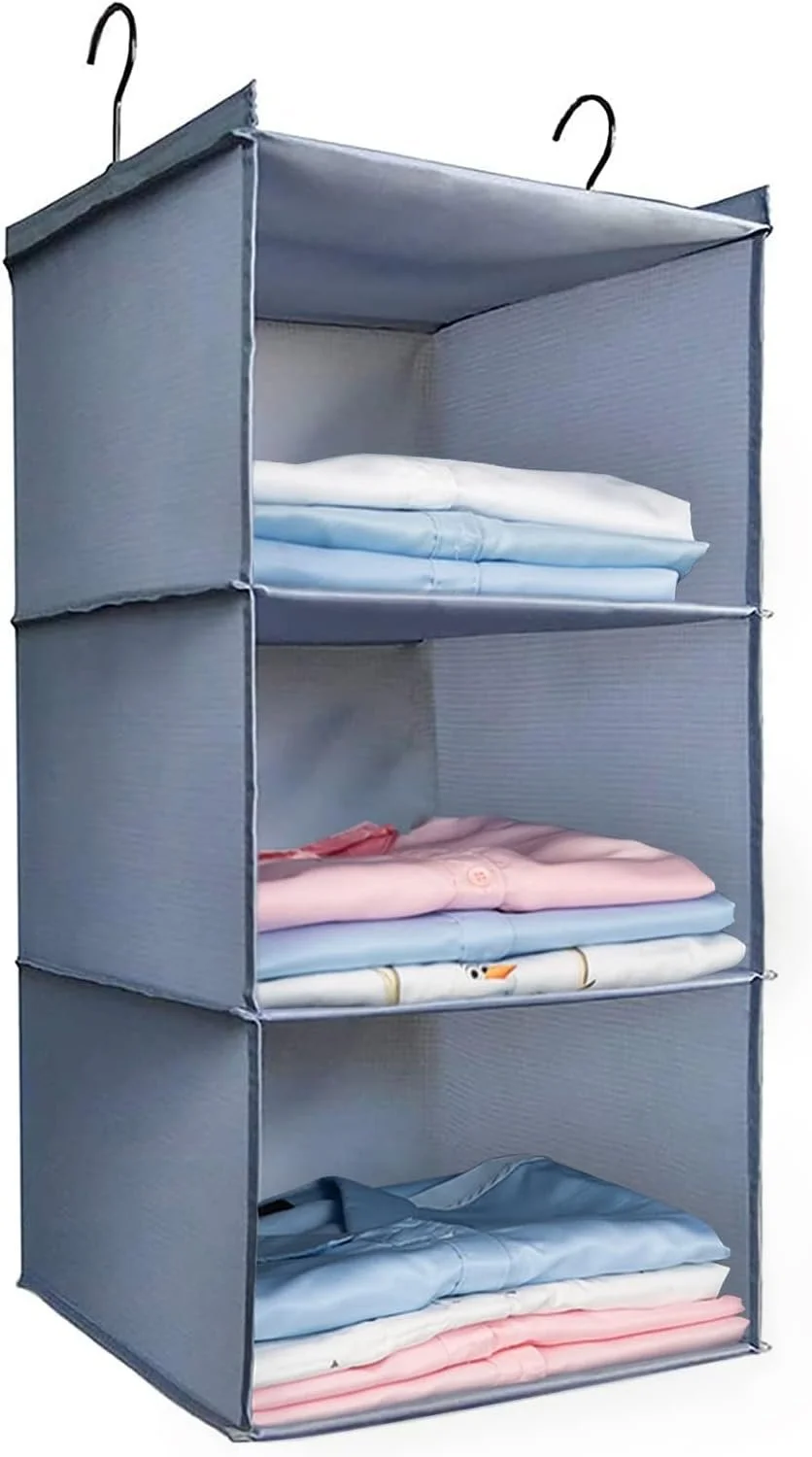
My closet is lacking shelves, and I only had a few coats to hang, so it seemed a waste to not use the rest of that space somehow. Enter the hanging closet organizer, and now I had additional shelves to stack smaller storage bins. Hanging on the shelves meant I didn’t have to play Jenga every time I wanted a specific bin from a pile.
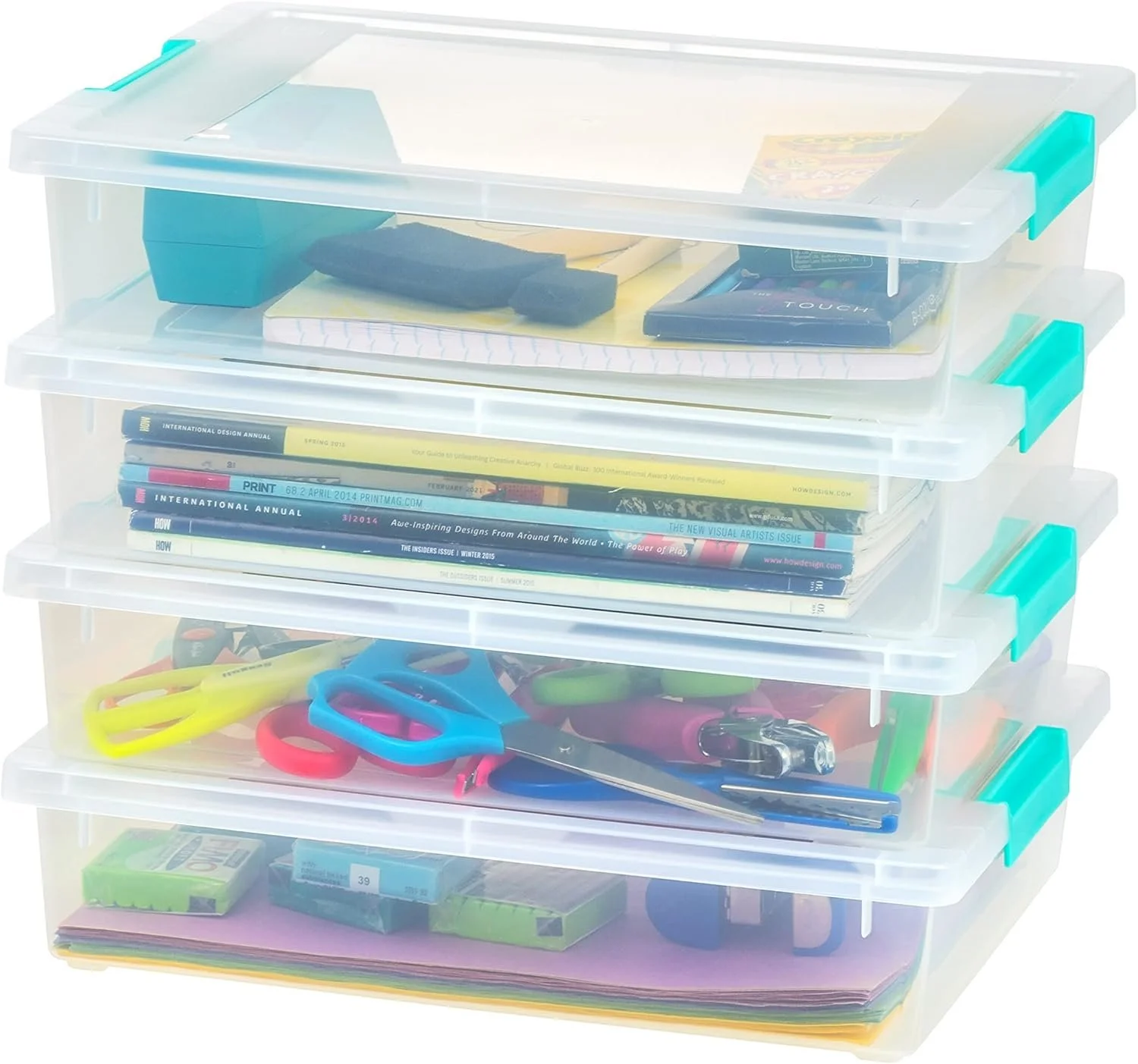
You know those expensive upright bagless vacuums? Do you think they cost what they do because they charge per extension piece? I need a place to corral all those attachments, and be able to reach for what I need without digging through unrelated materials. These bins separate and hold my vacuum attachments, and home plug in fragrance refills. I can easily take out the bin I need, and if I need more storage in the future, the lid makes it easy to stack and add more.
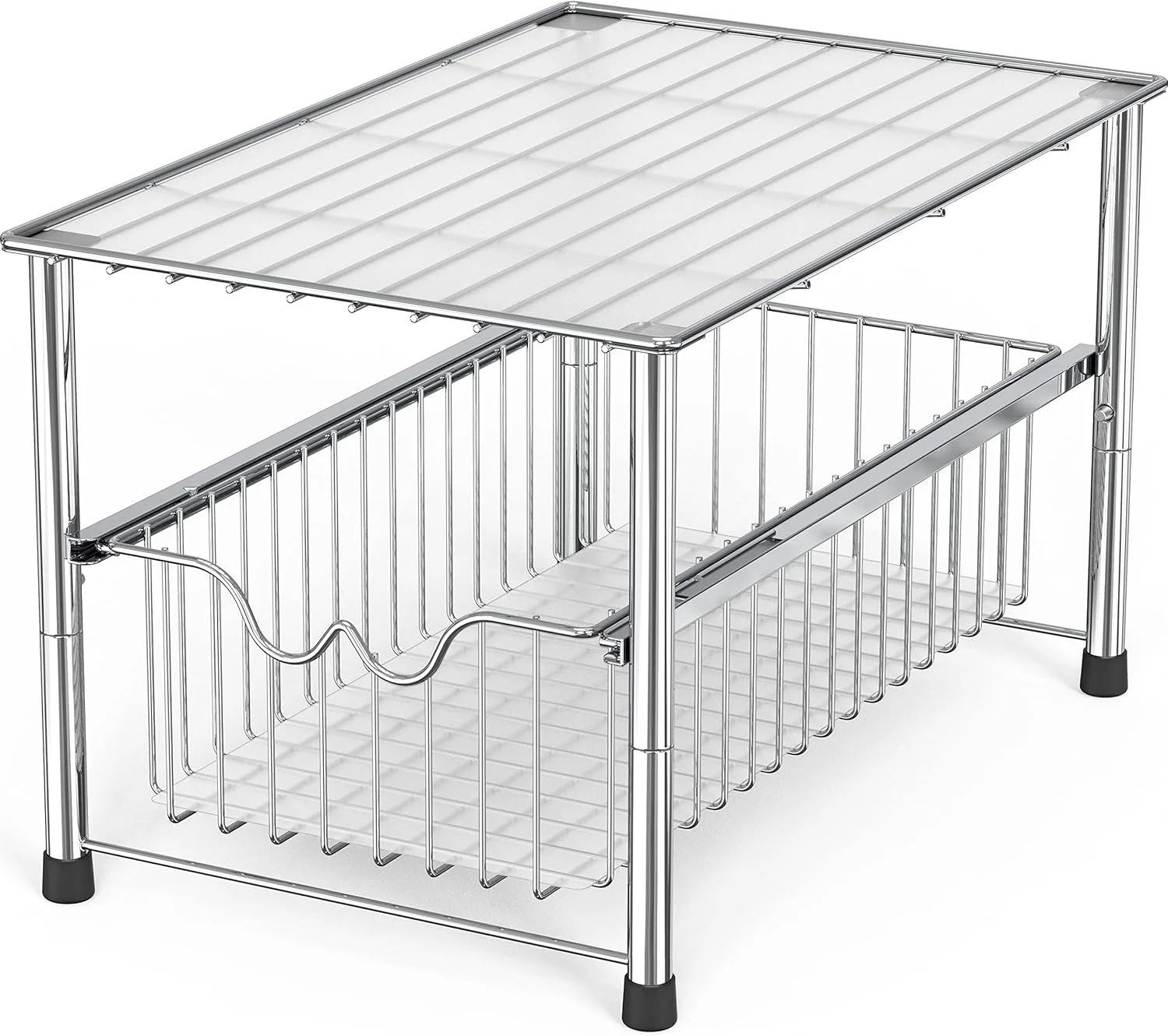
I have pets, along with a child, so I’m usually needing air freshener for other rooms than just the bathroom. This closet is steps away from the downstairs bathroom, but also the living room, kitchen, and home offices, all areas that need freshening up. Makes perfect sense to hold the often reached for items that get used all over the first floor. The drawer means I get additional stacking storage above, and can easily access the Fabreeze without moving things around.
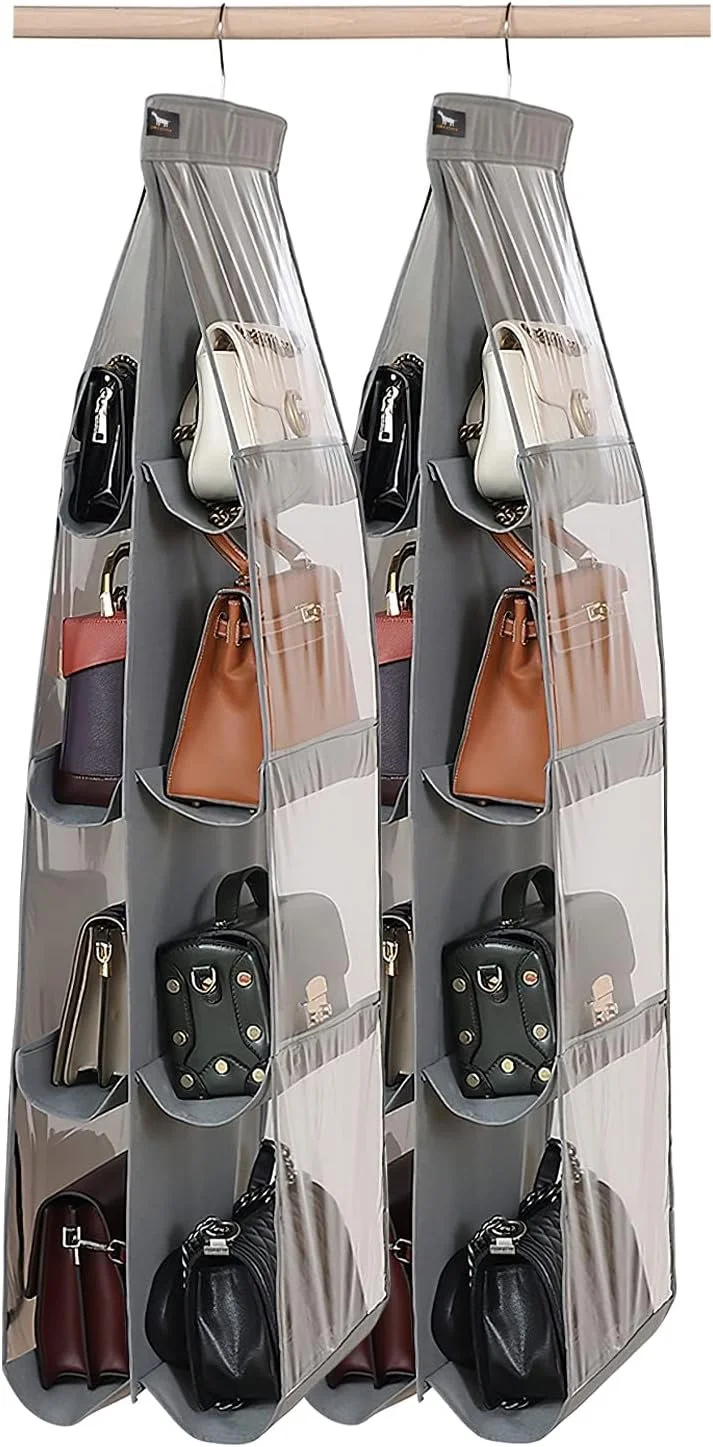
This closet purse holder is being reworked to hold my daughter’s mini backpacks. They have to go somewhere, but there’s no room to store them with the school backpack in the drop zone. And we don’t want them out and cluttering an area, especially since they’re only used one at a time, and not all that often. This keeps them off the floor, easy to see, reach, and put away. This is also a great hack to add to a coat closet to store hats and scarves!