Invisible Organization: My Real Life Kitchen Reset
Invisible Organization is about storage and systems that quietly support daily life, without adding visual clutter.
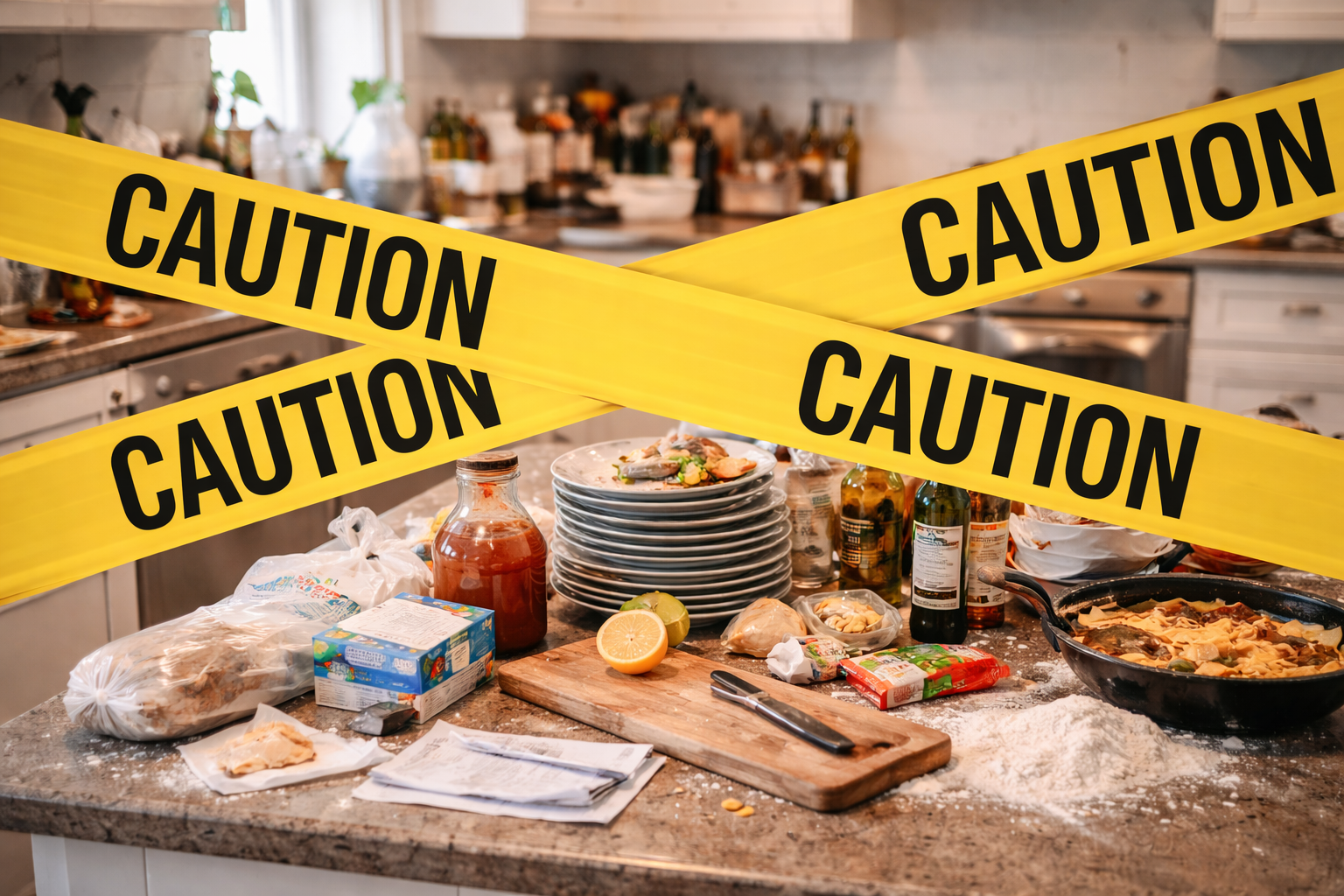
Dramatic reenactment
This post contains a mix of the results of products used in my actual kitchen, as well as shoppable product page images for better clarity of the items used.
As an Amazon Associate, I earn from qualifying purchases. This means I may earn a small commission when you click my linked images, at no extra cost to you. Clicking these links helps support my site and allows me to continue providing content. Thank you!
My kitchen didn’t slowly get messy; it detonated
One day everything was humming along just fine, and the next? My countertops were auditioning to be horizontal storage units. Drawers were swollen shut. Cabinets were holding secrets. My pantry had become a retirement community for items well past their prime. And my kitchen peninsula? Technically still there. Spiritually buried under piles of… everything.
More than once, I’d walk in with the pure intention of grabbing a snack, take in the chaos, and immediately “nope” my way right back out. That’s when I knew: something had to give.
What finally clicked was this: my kitchen didn’t have a mess problem, it had a systems problem. The things I couldn’t see, poor storage, awkward layouts, no real organization, were sabotaging the things I could see. The chaos wasn’t laziness (I HATE that word). It was just bad infrastructure.
The realization hit me in the most unglamorous way possible: sitting at my computer, fluffy socks and under eye patches worn, mid-scroll, when it dawned on me: I was using my drawers and cabinets all wrong. With a few unexpected days off for the holidays, I decided to lean all the way in. Not a light refresh. A full blown kitchen reset. The kind where you briefly question your life choices before things get better.
Because I know myself, I had to do this strategically. If I went too big, too fast, I’d abandon the project halfway through and somehow make things worse. So I went slow and methodical: one drawer, one cabinet at a time. Everything came out. What I didn’t need was purged. What could be donated was set aside. And the “keepers” temporarily went back where they came from, purely as placeholders.
Once the trash was gone and the “donate” pile was safely out of sight, I took a real look at what remained. No more mystery items shoved to the back of cabinets. Just the tools and products we actually use. And with that clarity, I could finally rethink how my kitchen should work.
Case in point: our pet drawer. It lived under the coffee bar and somehow held… not nearly enough. Pet food lived elsewhere. Treats were in another spot. Supplements were scattered. Which made no sense, because we had to access these items every single day. So instead of forcing that sad little drawer to do a job it was never meant to handle, I relocated all pet-related items to the bottom pull out shelf of the pantry. One zone. Easy access. Problem solved.
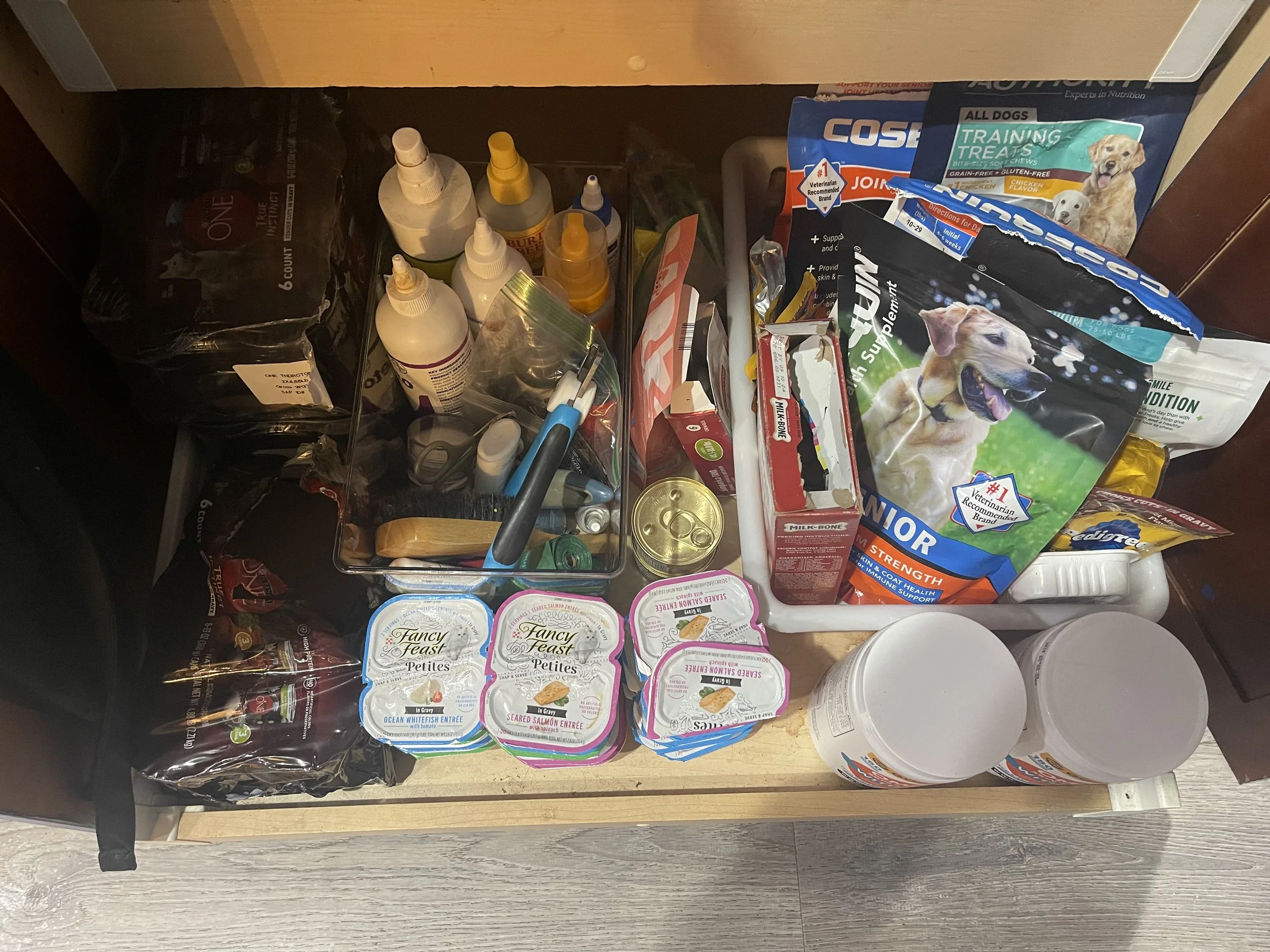
This way I can fit everything together, and easily pull out to access what I need
That move freed up the drawer under the coffee bar, and suddenly I had options. The tea stash that had been evicted earlier to make room for pet supplies? Perfect candidate. Teas and hot chocolates now live exactly where they belong: right next to the coffee station.
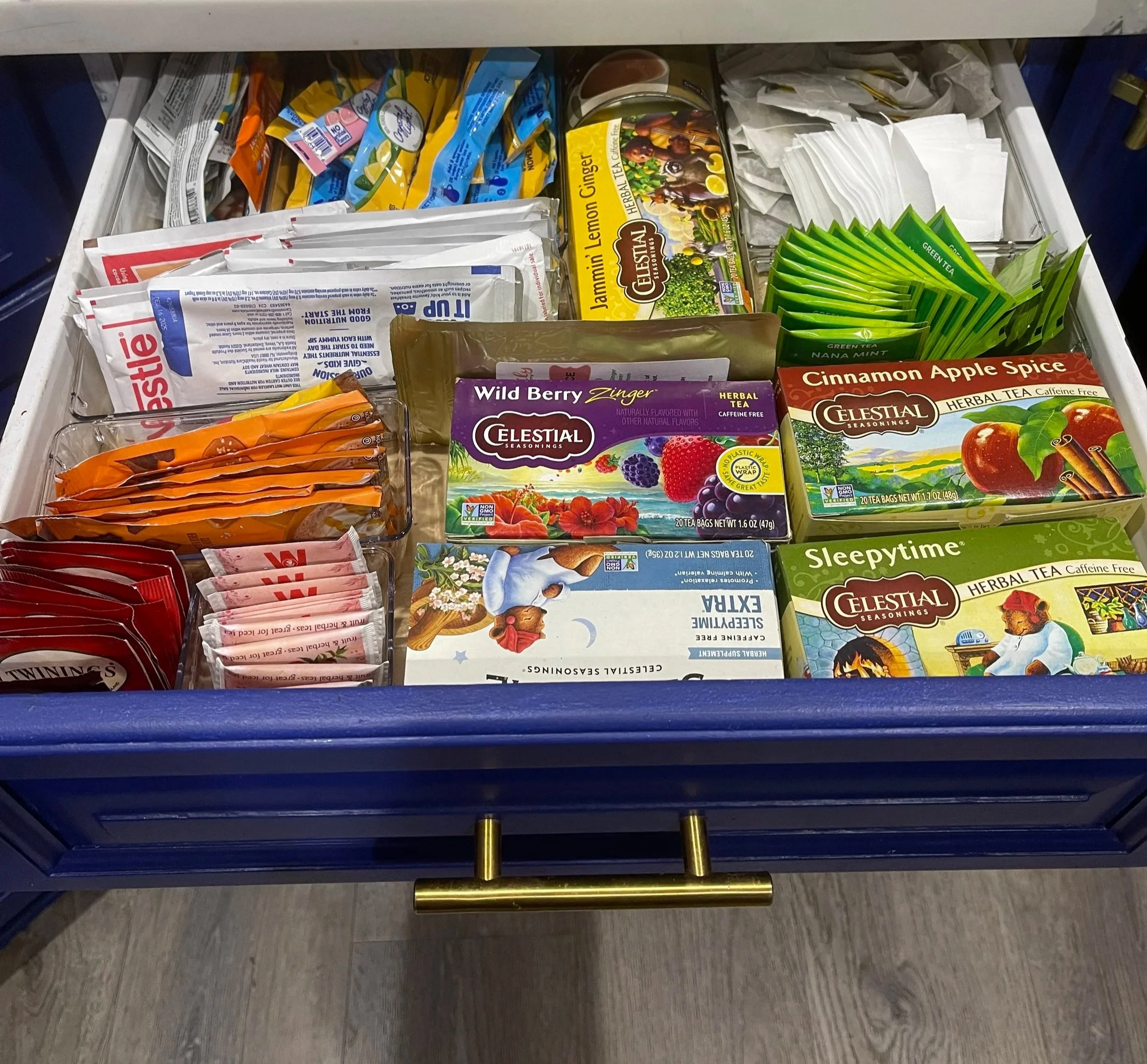
Teas, water enhancers, and hot chocolate all right under the coffee bar, and next to the hot water tap
Then came the Tupperware situation. You know the one. A cabinet above the toaster that doubled as a lid avalanche waiting to happen. By moving everything into a deep drawer in the peninsula, I gained visibility and accessibility, no more flinching every time I needed a container. Yes, that meant the pots and pans had to relocate… and that’s when the great kitchen migration truly began.
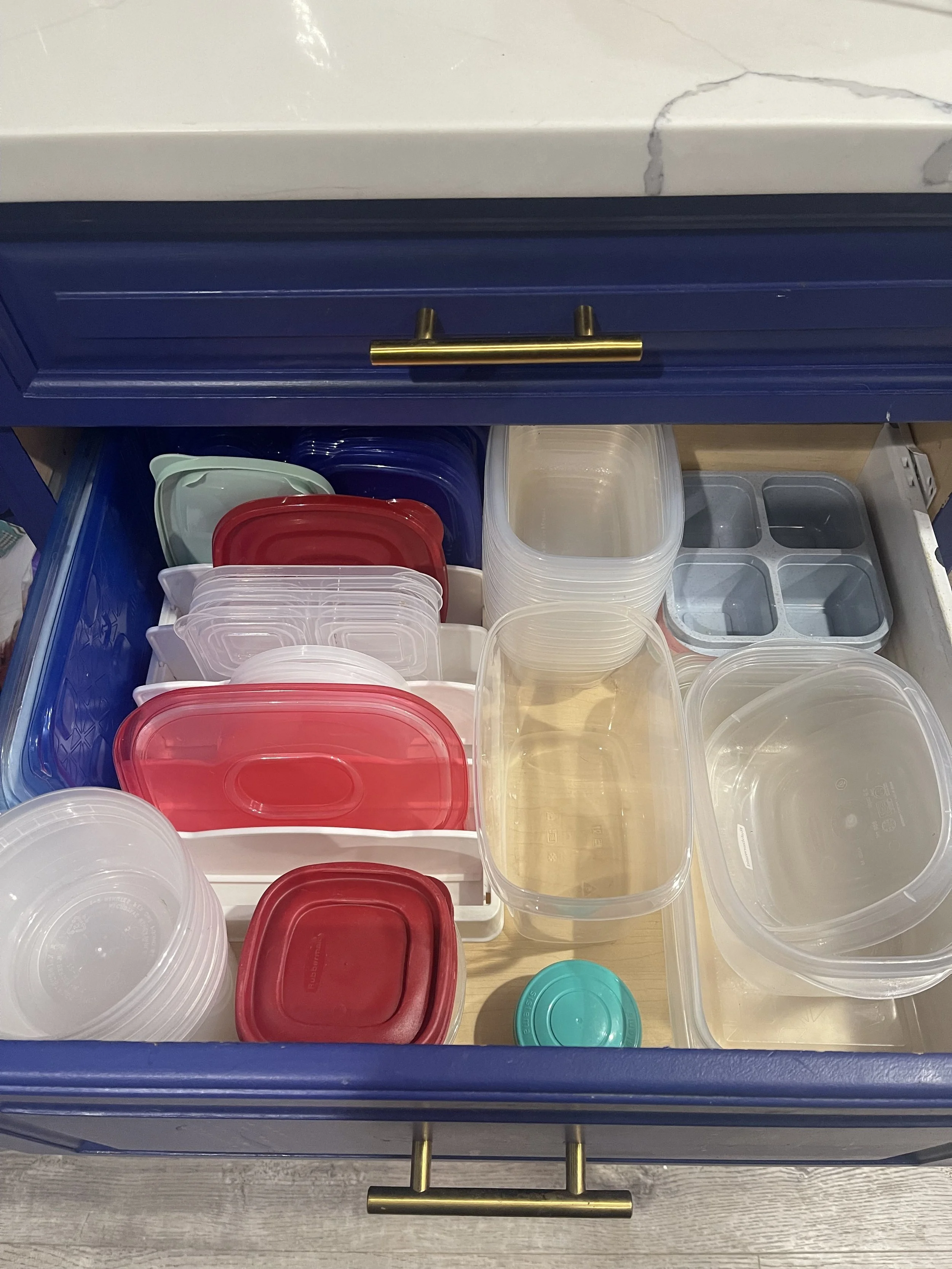
I know this looks like a lot of tupperware but this is the AFTER I purged what I don’t use
Things shifted. Zones evolved. One change unlocked another. And instead of feeling chaotic, it finally felt intentional.
Once I identified the true sore spots in my kitchen, shopping for organization tools became purposeful instead of impulsive. I wasn’t buying bins just to buy bins, I was solving specific problems, for the long term.
So now, let’s walk through my newly reorganized kitchen. I’ll show you the exact tools, containers, and behind-the-scenes fixes that helped wrangle everything behind closed doors, so the visible parts of my kitchen can stay calm, chic, and blissfully clutter-free.
And yes, I’ve linked everything I used below, because a good system deserves the right tools.
Candy Drawer
I have a candy drawer in my kitchen, because I’m a grown up and can do what I want. Okay, defensive ... .The truth is my house is a hosting location for many of our friends and family, and the best part of having kids that are not your own in the house, is that you can spoil them and give them back to their parents when they are officially rotten. Candy in my house is for a special occasion only, and play dates and family visits totally count as a special occasion, so every kid that walks into my house knows that today, dinner will be spoiled and the highs will be sponsored by sugar, a visit to my house is an exception to the everyday rules. (I’m not a crazy candy lady though, parents are consulted beforehand at the beginning of the visit, and their limits are respected. More often than not, the friend or relative will let their normal restrictions go out the door for the special occasion of a get together, and allow their kids free access to the candy, within reason.)
One aspect that got annoying though, was when I was mid conversation with a fellow adult visiting my house, and we’d hear “Aunt Heather, can I have some candy?” Up I’d get, deliver the goods, and sit back down. Until a second little voice would appear: “Aunt Heather, can I also have candy?” Up I’d get again, interrupting the conversation for a second time in mere minutes. These kids are like family, I don’t want them to be shy and unsure, they should feel comfortable and safe in my house to know that as long as their parental unit says it's okay, they should just help themselves to some candy. Thus, the candy drawer was born.
I will take a quick aside to say that I am blessed with a very generous amount of drawers in my kitchen, which allows me the privilege of keeping a drawer dedicated strictly to candy. I am aware that not all people are in the situation to have a whole kitchen drawer for something as frivolous as candy. Which leads me to an important point, I’m working within my specific space, for my specific needs. I host often enough and have the bonus space where a candy drawer makes sense. Maybe this is not the case for you. That’s okay, the take away can still be relevant to your needs. For me, candy is small, and I needed pantry space for larger, bulkier things. Candy in the pantry wouldn’t be easy to see, and access. I took a lot of small things, and merchandised them in a way that was not just visually pleasing, but easy for a young child (that was permitted by their parents to have some candy) to reach in and take what they wanted without needing to have a grown up hovering over them.
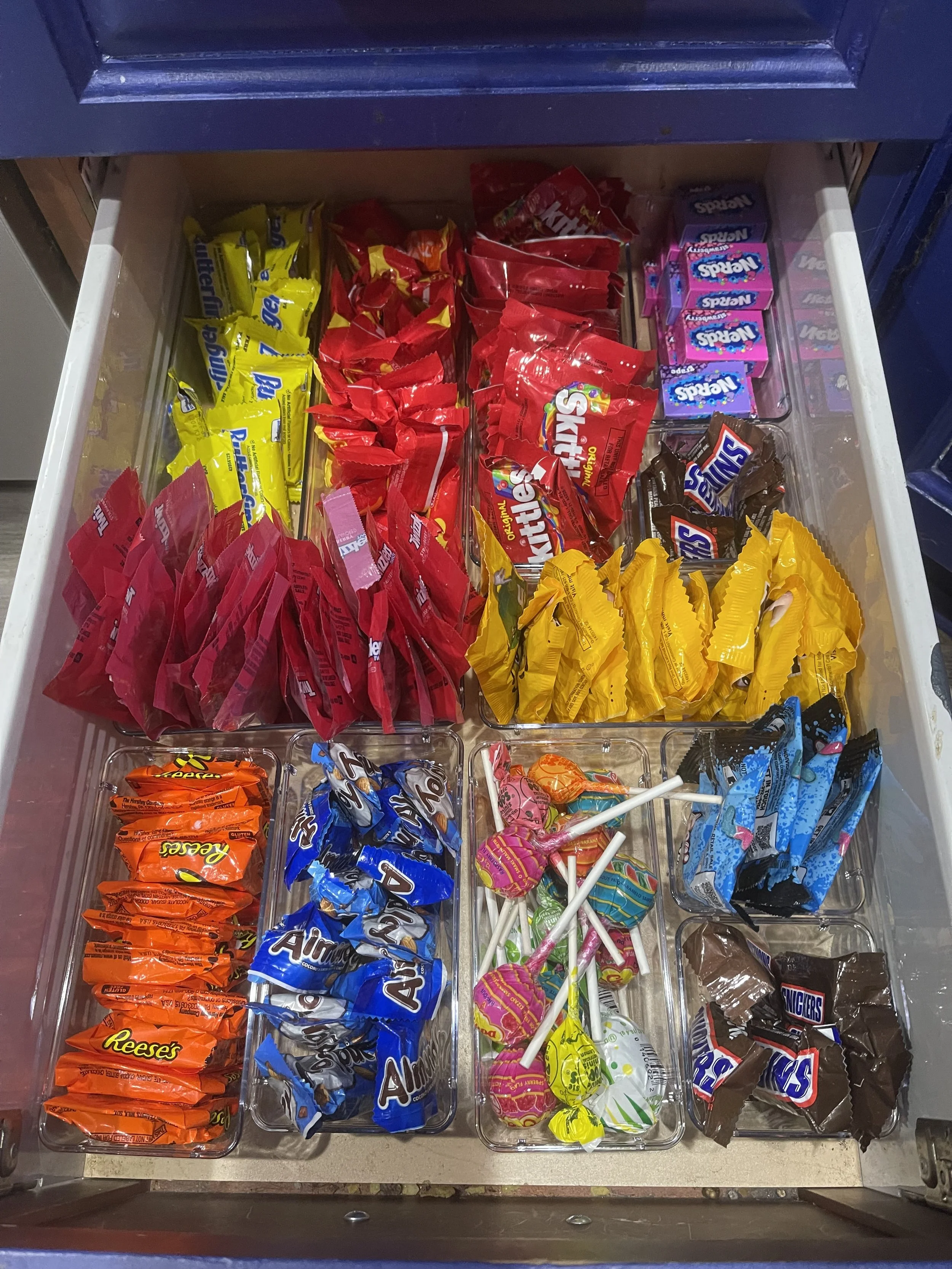
A delicious treat for taste buds and eyes alike
The overflow of Halloween candy was sorted, the candy nobody liked was discarded, and the remaining was placed into the appropriately sized container. I will say that since as previously stated, I’m not a crazy candy lady, I only kept the candy that fit into the containers. Any additional nuggets of sugar infused chocolate that were left after the organizers were full, were also discarded. What I was left with was a drawer filled with candy sorted and displayed. Easy to grab, and easy to see what we’re running low on. I know I only have to shop for candy when the drawer supply looks sparse, preventing me from having heaps of bags of uneaten candy taking up valuable kitchen space.
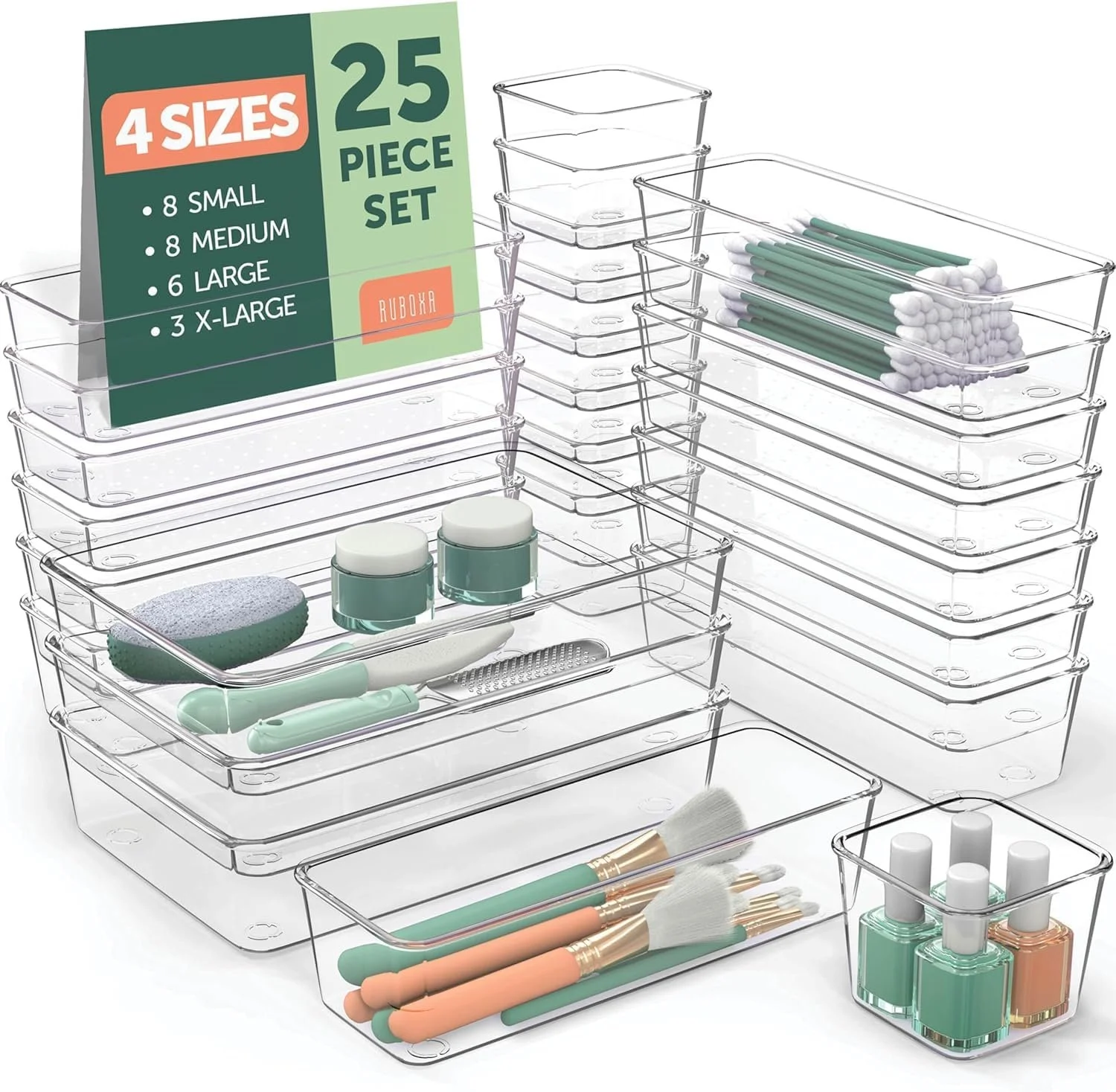
All I used to organize this drawer were these clear plastic drawer organizers
Food Container Storage
I used to keep all my food storage containers spread out over two shelves in an upper cabinet. Lids were all over the place, there was no rhyme or reason to what was placed where, and try as I might, each container selection led to a vicious game of Jenga that transitioned into a mess and a muffled scream. This location seemed like a place that made sense, but the space didn’t allow for me to follow through on that vision. It was causing more problems than it was solving, so I gladly agreed to train myself to reach towards the other side of the kitchen when looking to put food away.
I took my pots and pans out of the deep drawer in my peninsula, and renamed it the home of storage containers. Opening a drawer to grab what I need meant I could see all the size options and pick the best container, without knocking down everything else in its vicinity. I have a lot of tupperware, so I needed to stack, meaning I couldn’t store the lids with their container, but I wanted to keep all the lids together, and easy to see, so I could simply grab the matching one quickly.
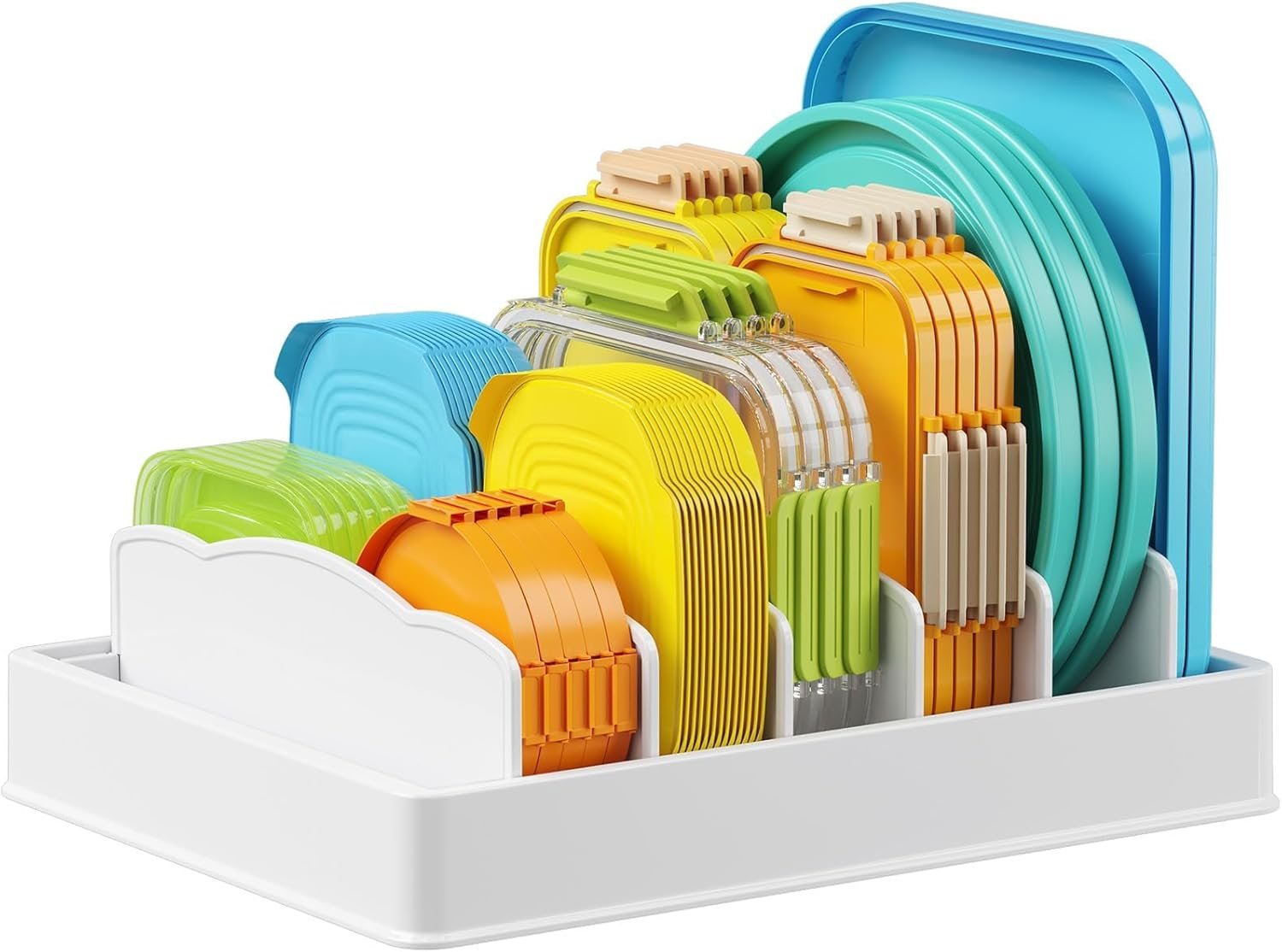
This lid organizer seems simple enough, but does a big job at keeping this drawer contained and accessible.
Pots and Pans
Removing the pots and pans from the deep drawer meant I needed a new home for them, and this home needed to make sense. I wanted them near-ish the stove, and easily accessible, since I use them every day. I did have this amazingly deep cabinet under the now drinks drawer that could easily fit everything, but it was too deep, and would mean digging would be necessary to get anything specific out. The location made sense, and the space was perfect for my needs. So how do I work this cabinet to avoid constant digging and rearranging just to take one pot or pan out? Enter the pull out cabinet organizers:
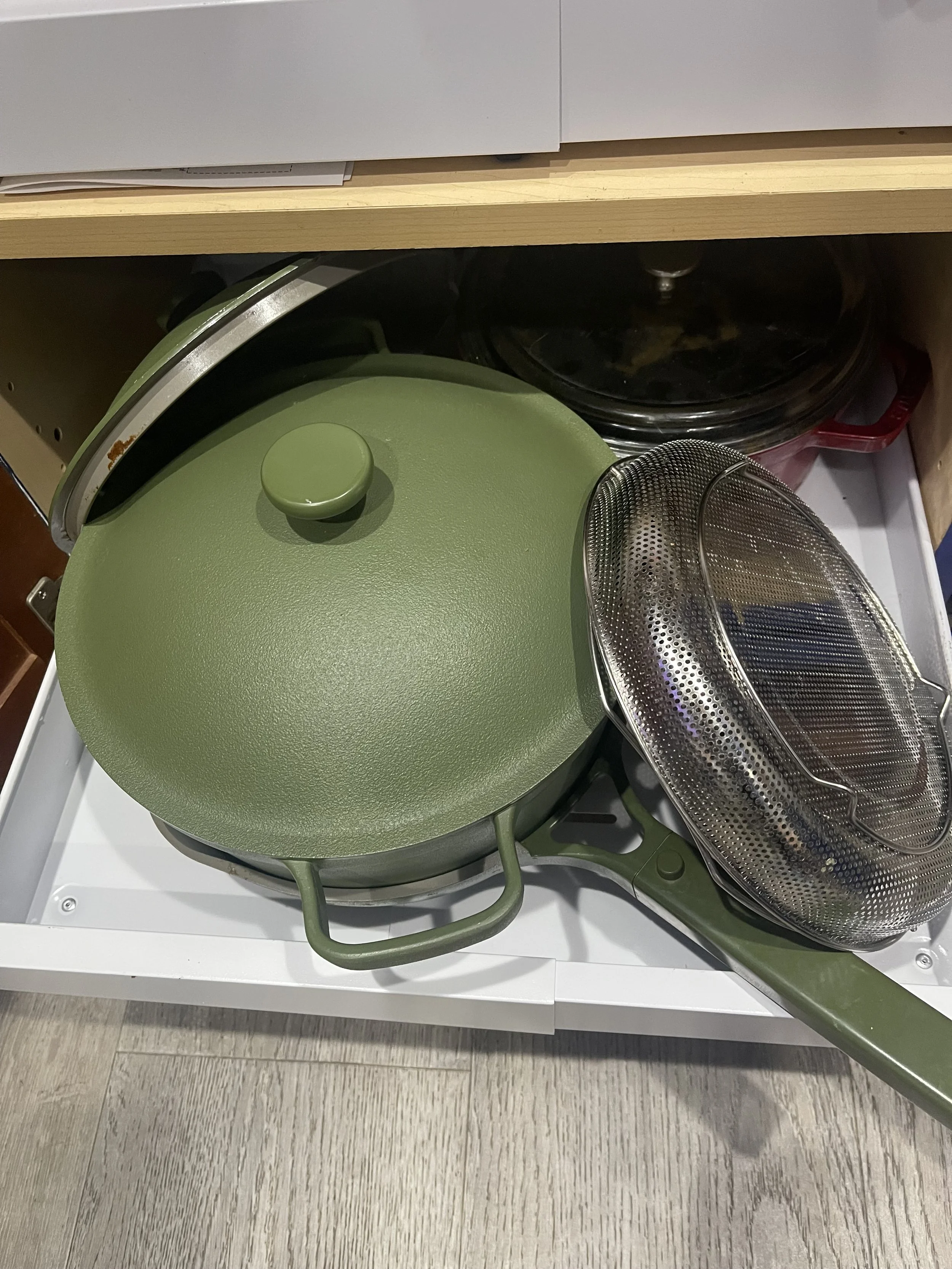
When I say these were a breeze to install, I mean these were so easy squeezy lemon peasy that I could have put these in myself. Of course, I wanted my husband to feel included in the project, so I allowed him to do the heavy lifting. I’m so generous.
Once in place, the pull out drawers allowed me to store everything I needed to in the deep cabinet, and with a simple pull, grab that specific item in the back of the shelf without taking everything else out. Big bulky everyday items were now perfectly placed in a space that could accommodate them, while remaining easily accessible.
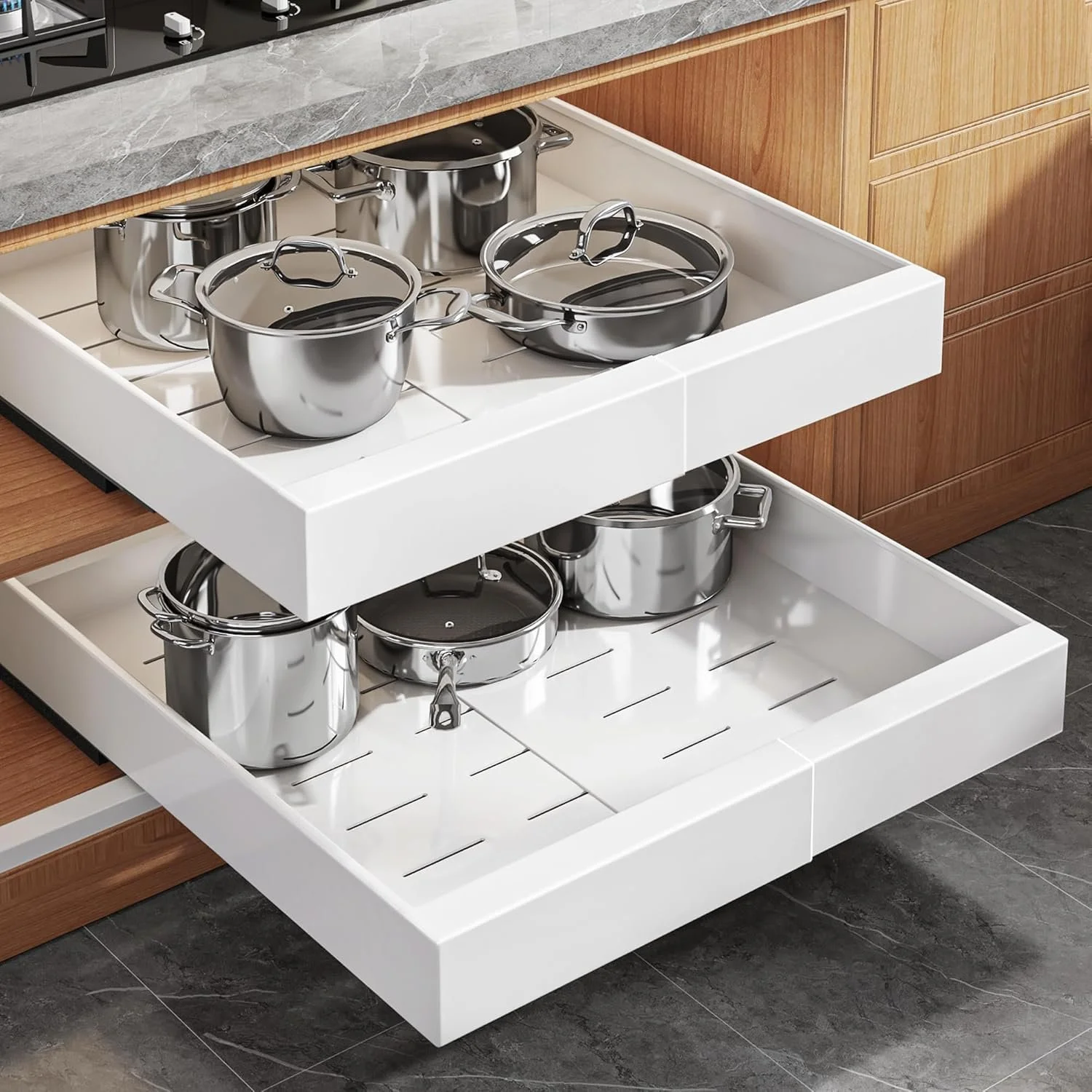
The easiest way to make deep cabinets accessible and functional for day to day use
Upper Cabinets
Ever noticed that there’s a lot of wasted space in cabinets? Most of us don’t have enough of something to fully stack on the entire shelf, leaving valuable real estate just waiting to be used. I have a small collection of dessert plates, but they’re only in a set of 4. I like to mix and match when the time calls for it, but storing them is rough. Stacking one set on top of the other means that I have to remove what’s on top to find the set I want. I don’t use them so often, so storing them on top of the everyday used plates also makes no sense. This was a no-brainer for me though, as I knew the solution right away, thanks to a previous pantry redo I had done for a friend.
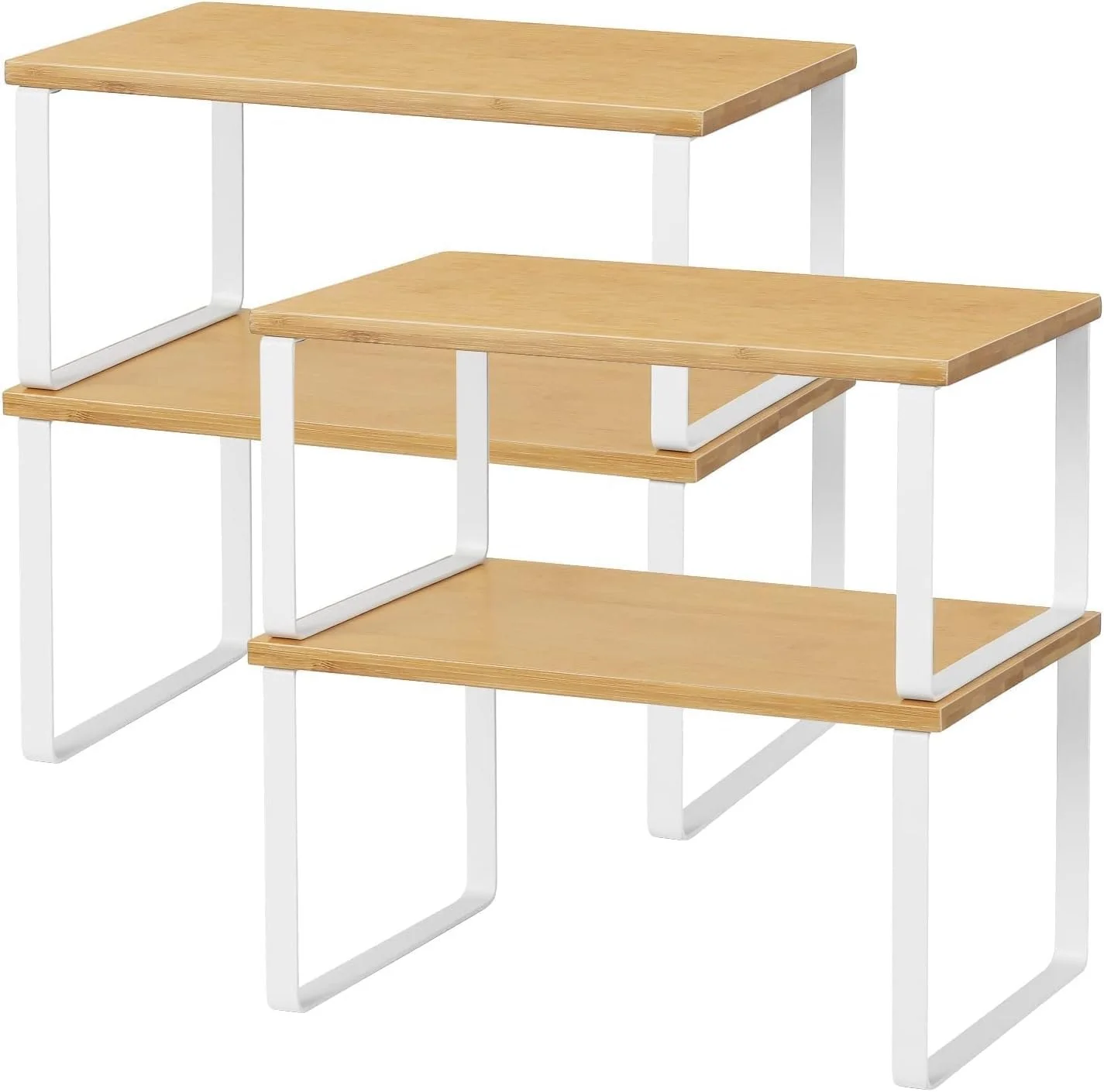
These get you more storage space in your cabinets
This cabinet shelf helps split one large shelf into two smaller ones, allowing for maximum shelf space to be utilized. For example, my apple slicer was too clunky for a drawer, and kept causing them to get stuck, but I didn’t want to waste valuable shelf space on it. By creating a secondary shelf, I can store my slicer above my spiralizer, using the previously untouched air space. My long dessert trays can be stacked on the smaller shelf, with my dessert plates stored neatly underneath, all without creating a leaning tower of doom.
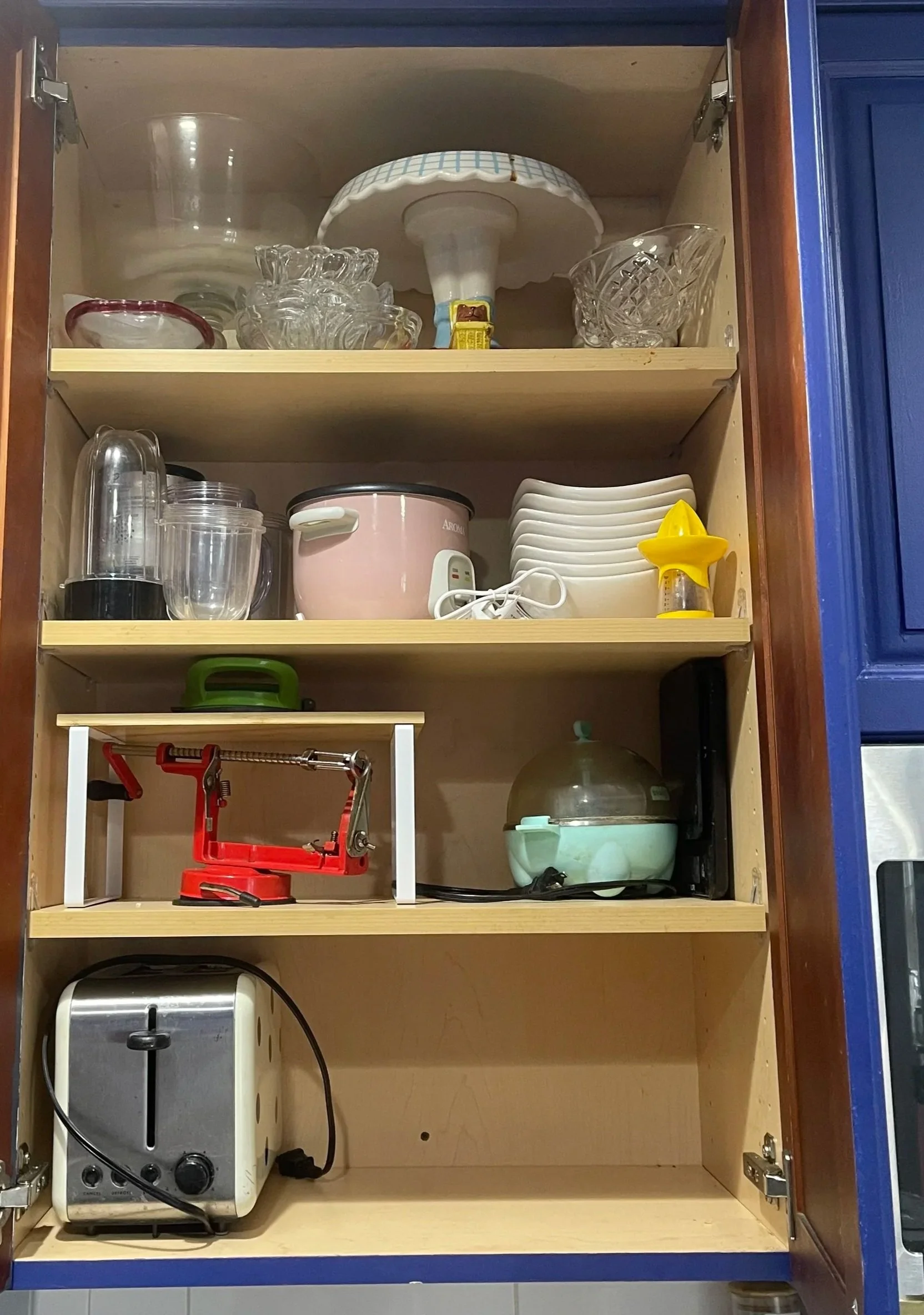
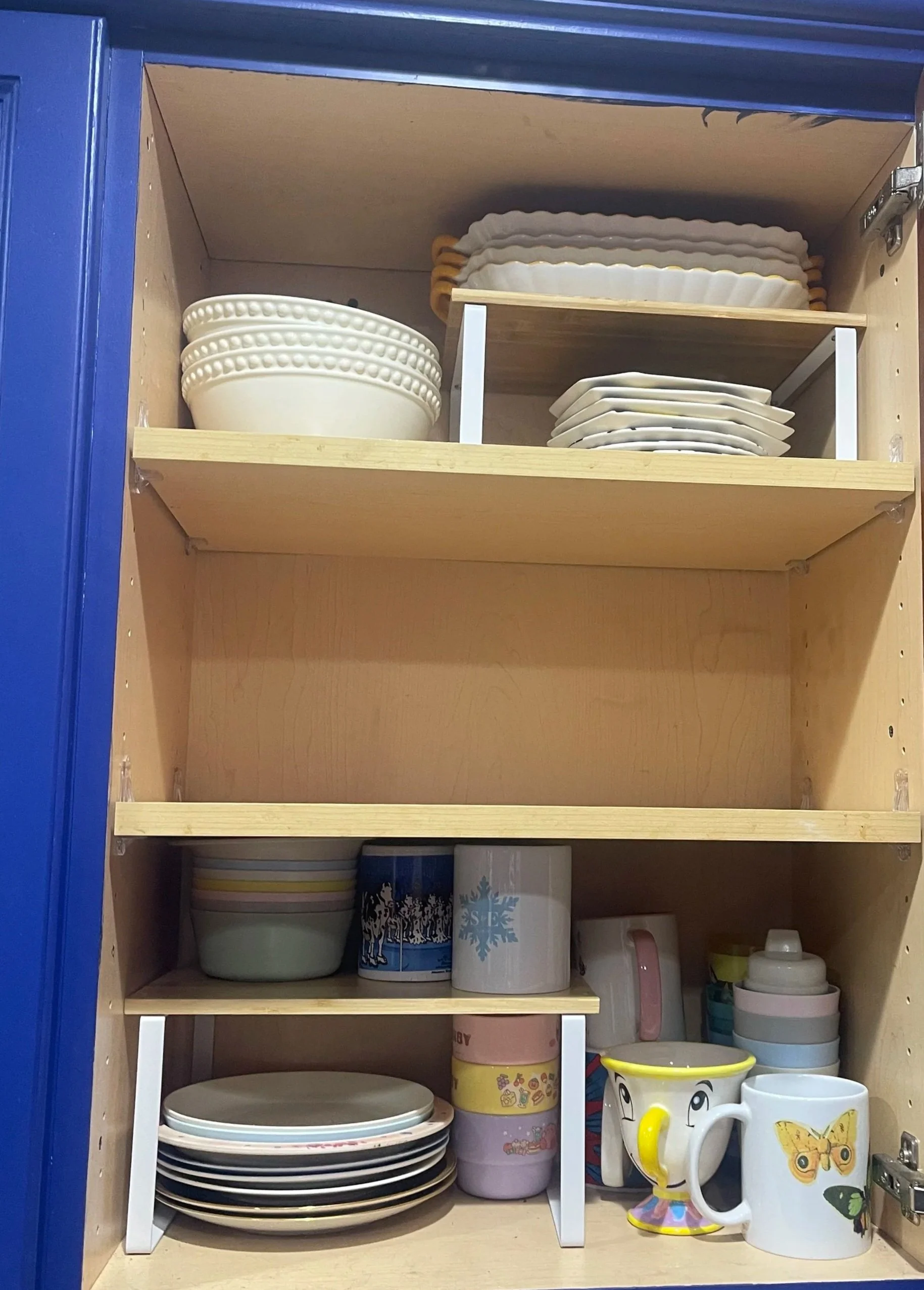
Thanks to these little shelves, I found myself with extra, unused cabinet space!
Straws
Cleaning out my drawers meant that small things I was storing in them just for the sake of accessibility and available space needed a new home. Like my collection of reusable straws. Rather than keep them mixed in with my cutlery, wouldn’t it make sense to store them where I keep my drinking cups? Enter, the straw organizer:
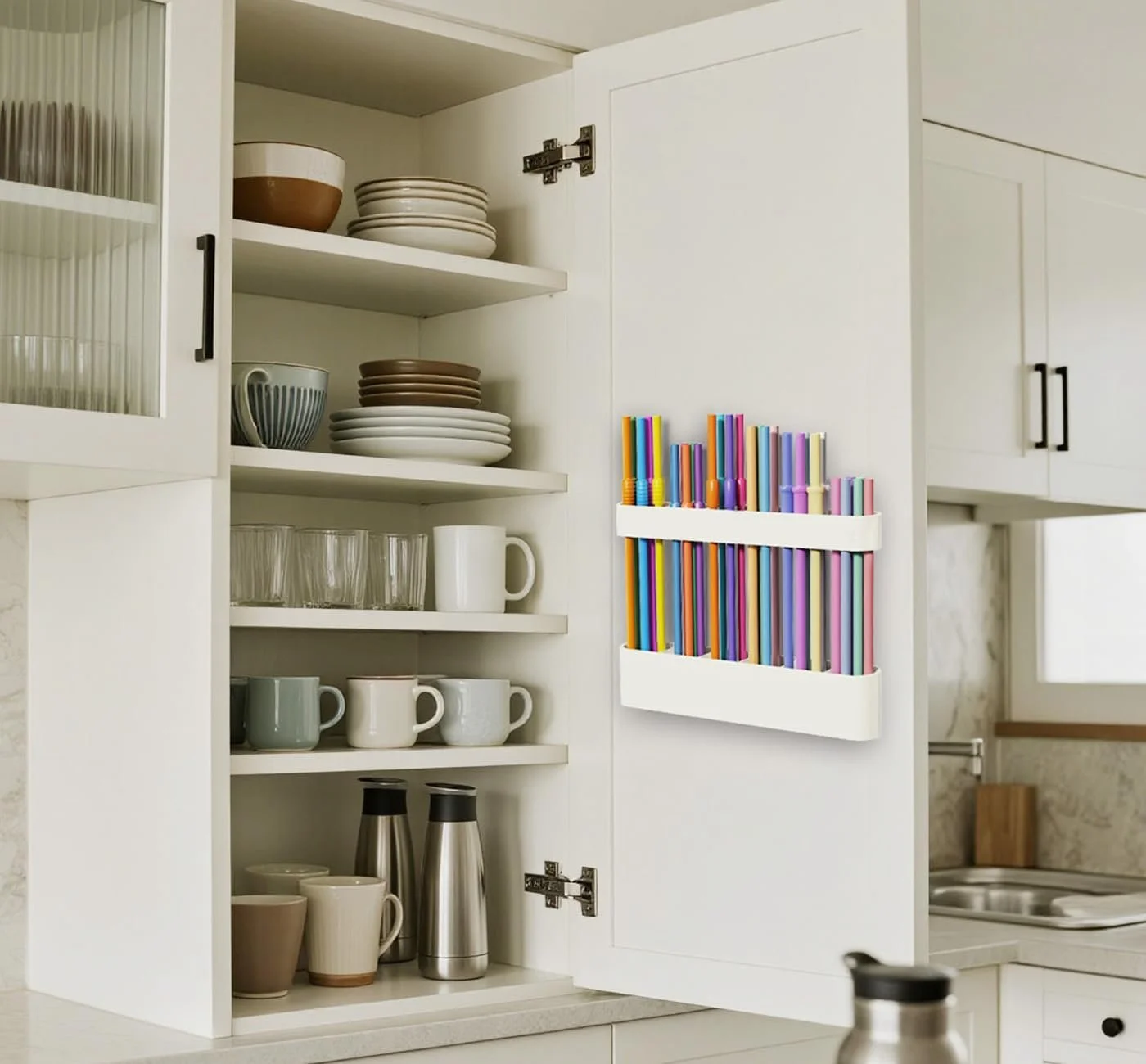
All the straws stored inside the cabinet, out of sight, but easy to access, in a space that makes the most sense for them to be!
Drawer Liners
When I say I cleaned out my drawers, I mean I really cleaned out my drawers. I emptied, vacuumed, sprayed and wiped, and sat back reflecting on what on earth was going on in my life that caused these drawers to be so…I don’t want to say dirty, but let's rip the band aid off and just say it. If you can vacuum debris out from your drawers, your drawers are dirty. This is a no judgement zone, but we need to learn to admit when conditions are less than ideal. I wanted to prevent this from happening again, and figure out how to keep the drawers clean without the constant need for hoovering and scrubbing. I settled on some non-slip drawer liners with a cute print. I liked the idea of having a small hidden pop of design that only I could see. And now that my drawers were decluttered and organized, that design would be appreciated, rather than buried and lost.
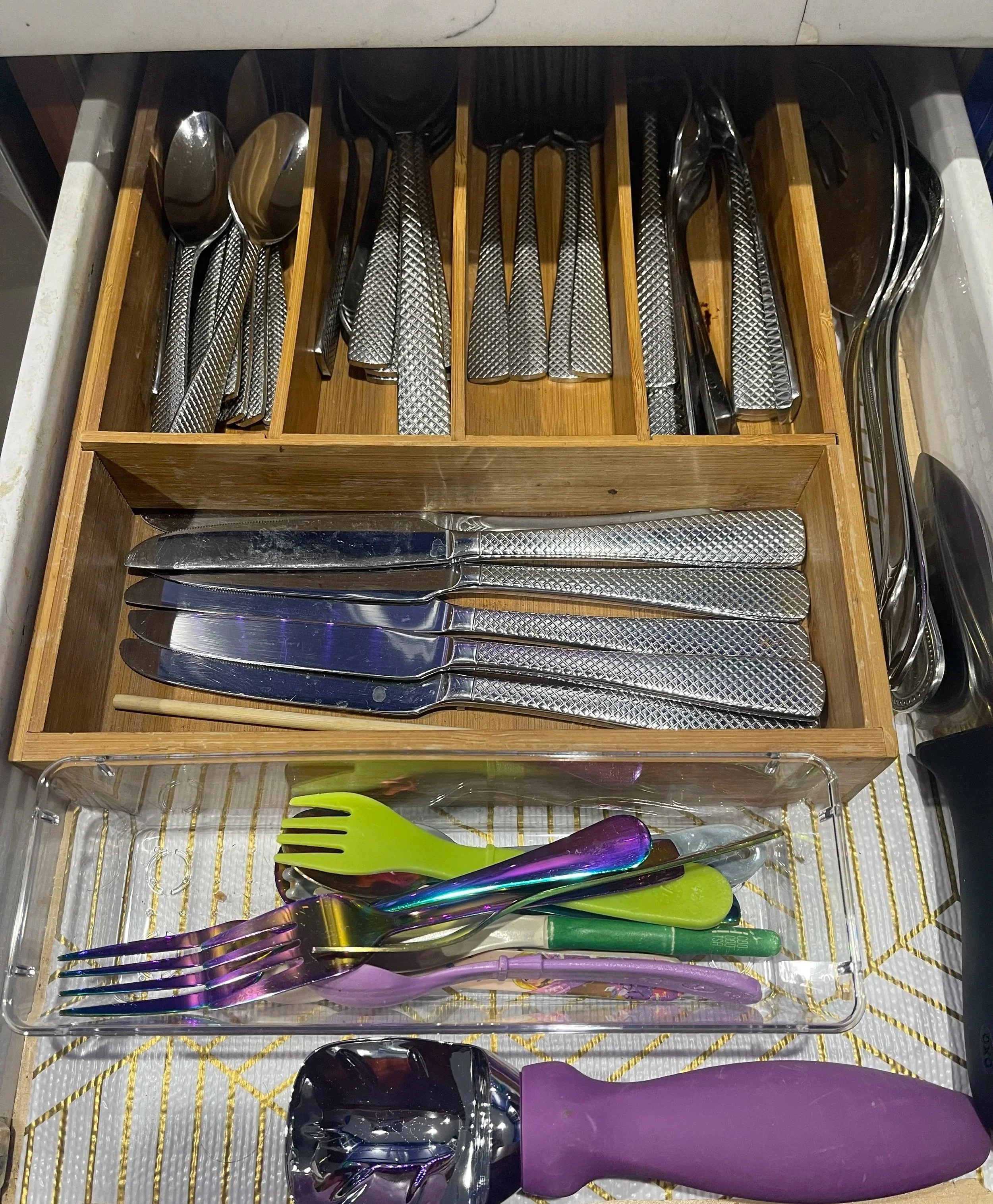
These liners don’t need adhesive to stay put, so I can easily take them out and shake them clean and wipe them down and place them back in, keeping my drawers, and items inside, mess free.
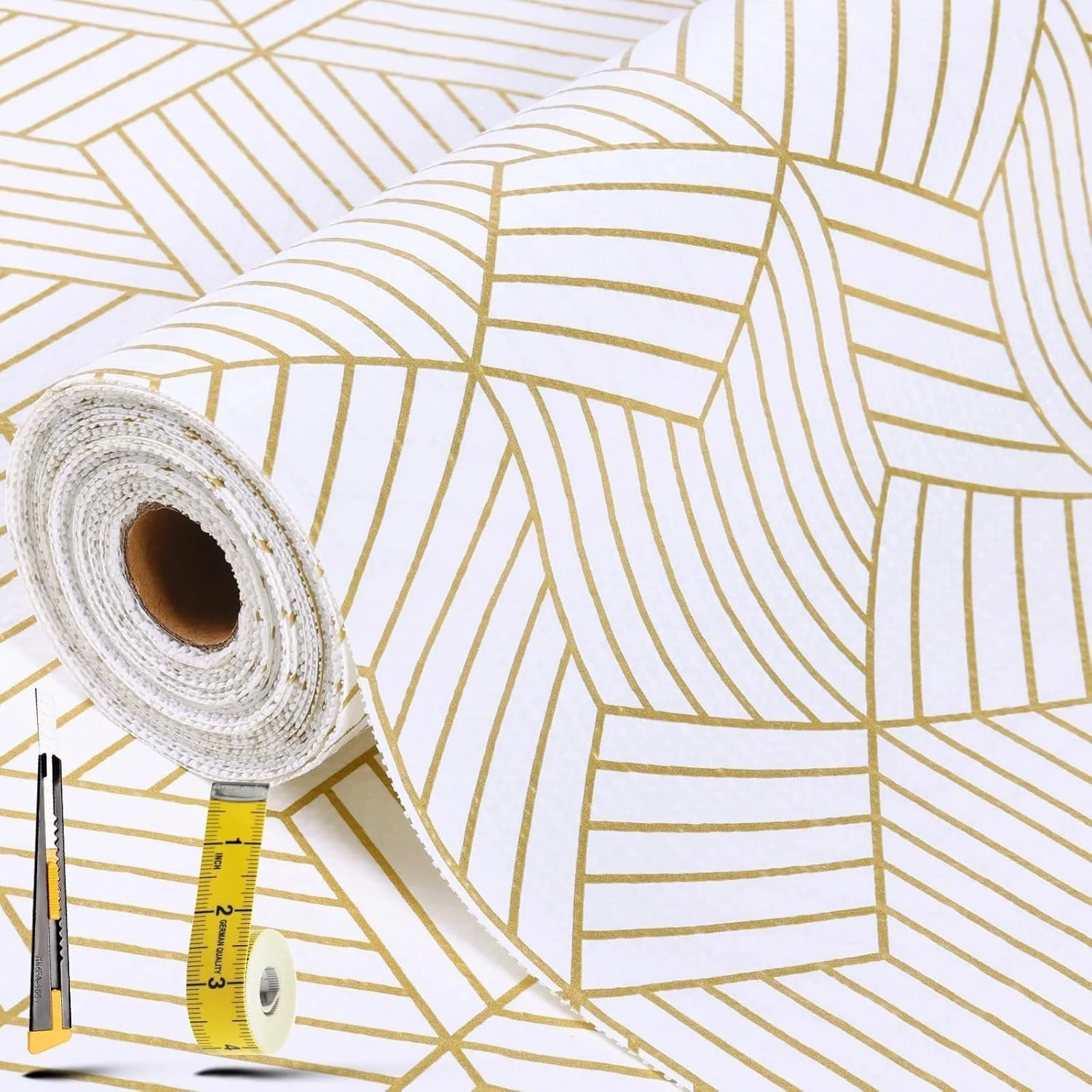
These liners are super easy to cut to customize for any space, and includes a box cutter and ruler.
These were the organization aids that worked for my space, but all spaces are snowflakes, and your needs might differ from mine. Fear not. I’ve done my research while combing Amazon for such tools, and came across additional items that can help with other specific kitchen issues.
Mugs
Coffee bars are not only popular, they’re a necessity for adults who need a caffeine jolt to put the “fun” in “functioning”. If you’re looking to streamline your morning routine, you might want to start by organizing your coffee mugs. We all know the issues, stacked mugs easily tip inside the cabinet, and displaying them outside the cabinets might not be feasible if you don’t have the counter space to store them. I recommend these two products:
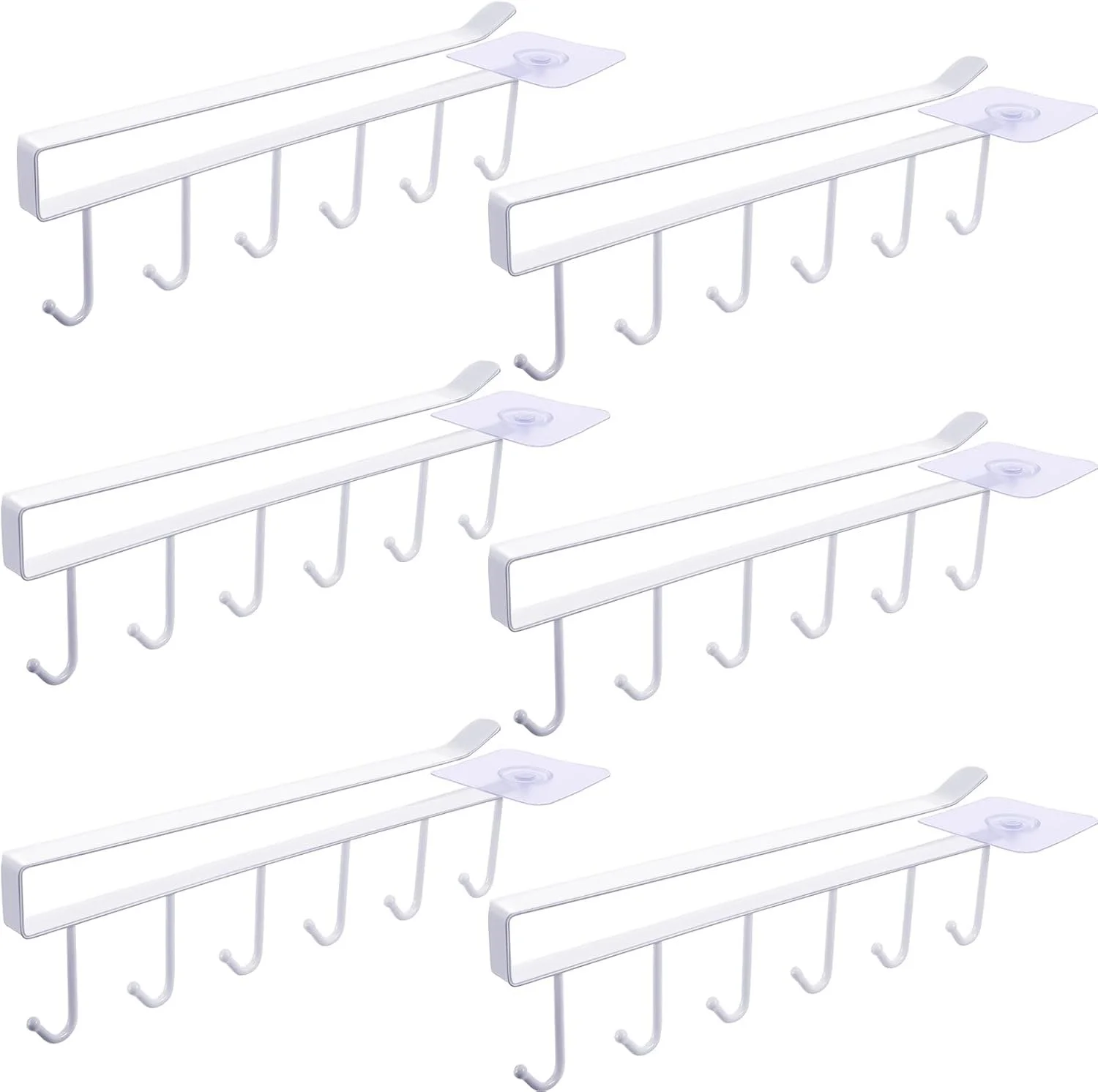
No drill mug hooks, set of 6
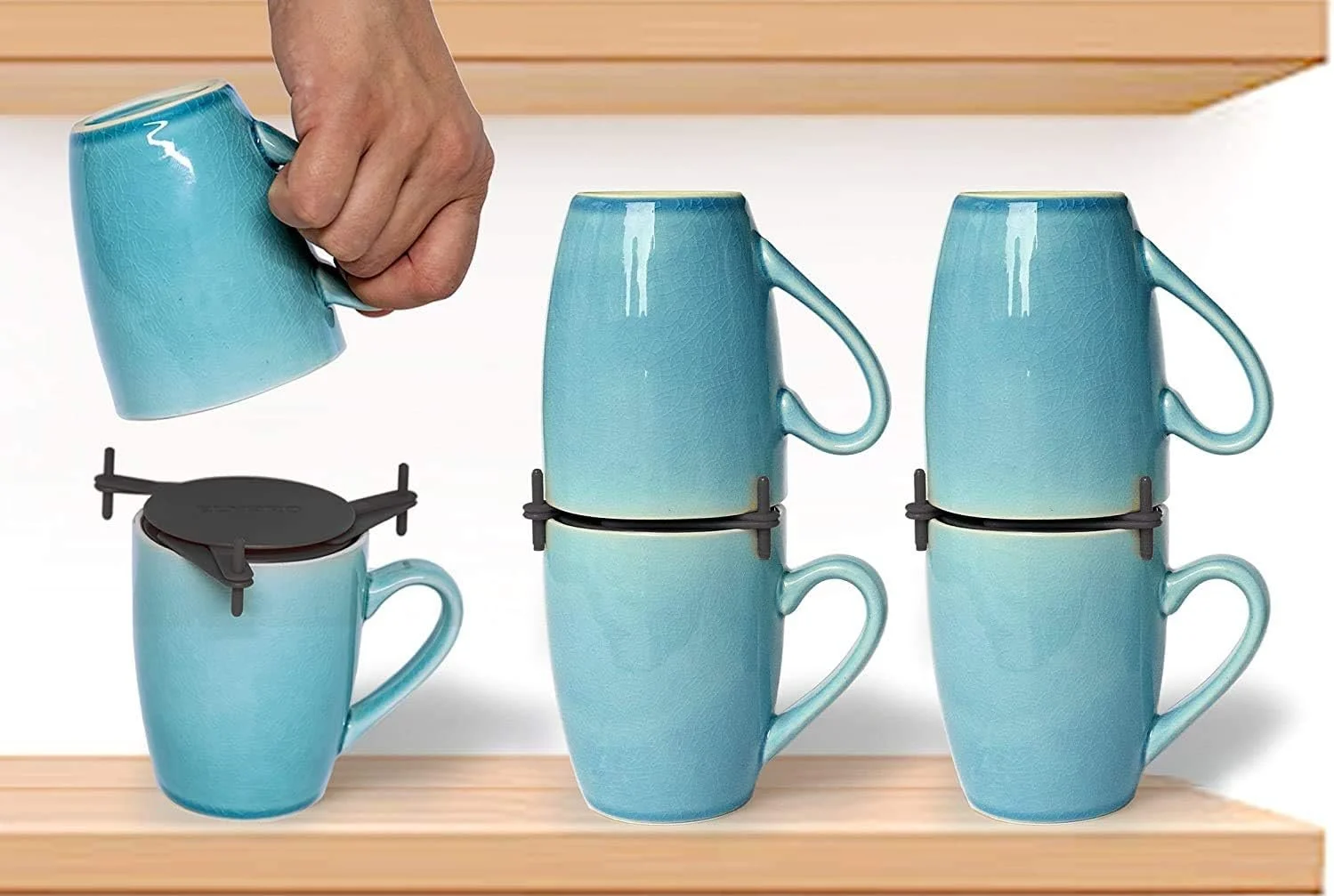
Mug stackers allow you to safely stack mugs of every size
Depending on what your desired set up is, allowed by the limitations of your space, these can help keep clunky mugs neat and orderly, or display them as the usable works of art that they are. The mug organizers allow mugs inside the cabinet to stack easily, allowing previously unused air space to be used without tipping and tumbling every time you close the door. The hooks work for open shelves above a coffee station, keeping the mugs off the countertops, while still being nearby and easy to grab.
Vegetable Storage
I found a really cute hack for storing onions and potatoes, veggies that don’t need to be kept in the fridge, but overwhelm the counterspace. If you have height in a cabinet, try using these wire magazine holders to keep veg in.
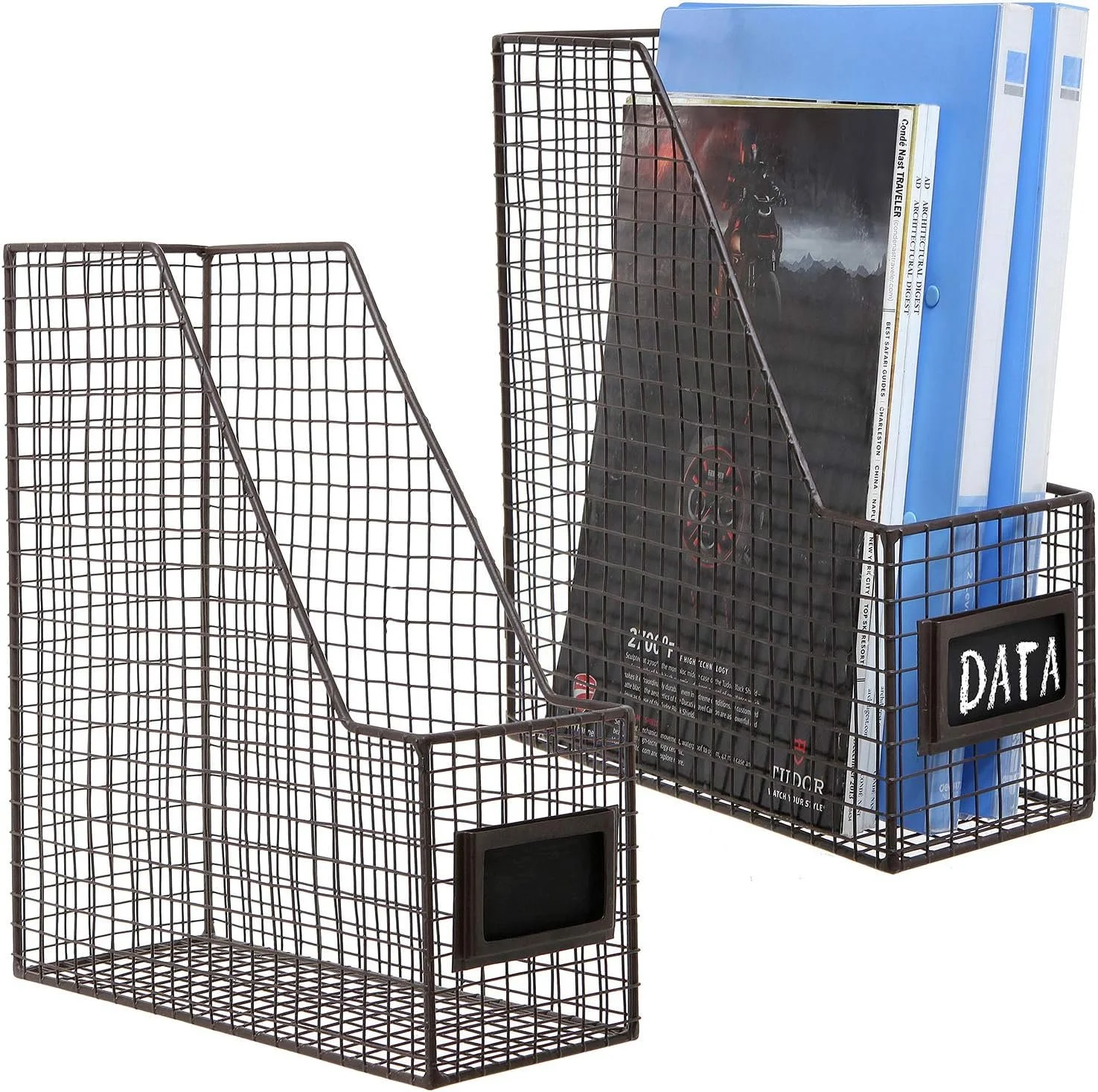
The wide width allows for vegetables to be stacked and contained
These holders are aerated yet contained, allowing you to stack and group loose veggies to keep them out of the fridge and off your counters. If you don’t have a high cabinet, but you have open counter space, using these is a great compromise to having your root veggies organized and visually appealing. I’ve been storing my potatoes in the bulky bag in my pantry, and my onions have been living in the fruit bowl; and there is NO more room to spare in there. I much prefer this idea, and I’ve decided to add it to cart.
Spices
I’ve taken part of the trend where my spices are all decanted into uniform jars with aesthetic looking labels, and honestly? I’m here for it. My most used spices are kept easily within reach now, thanks to this magnetic stove shelf:
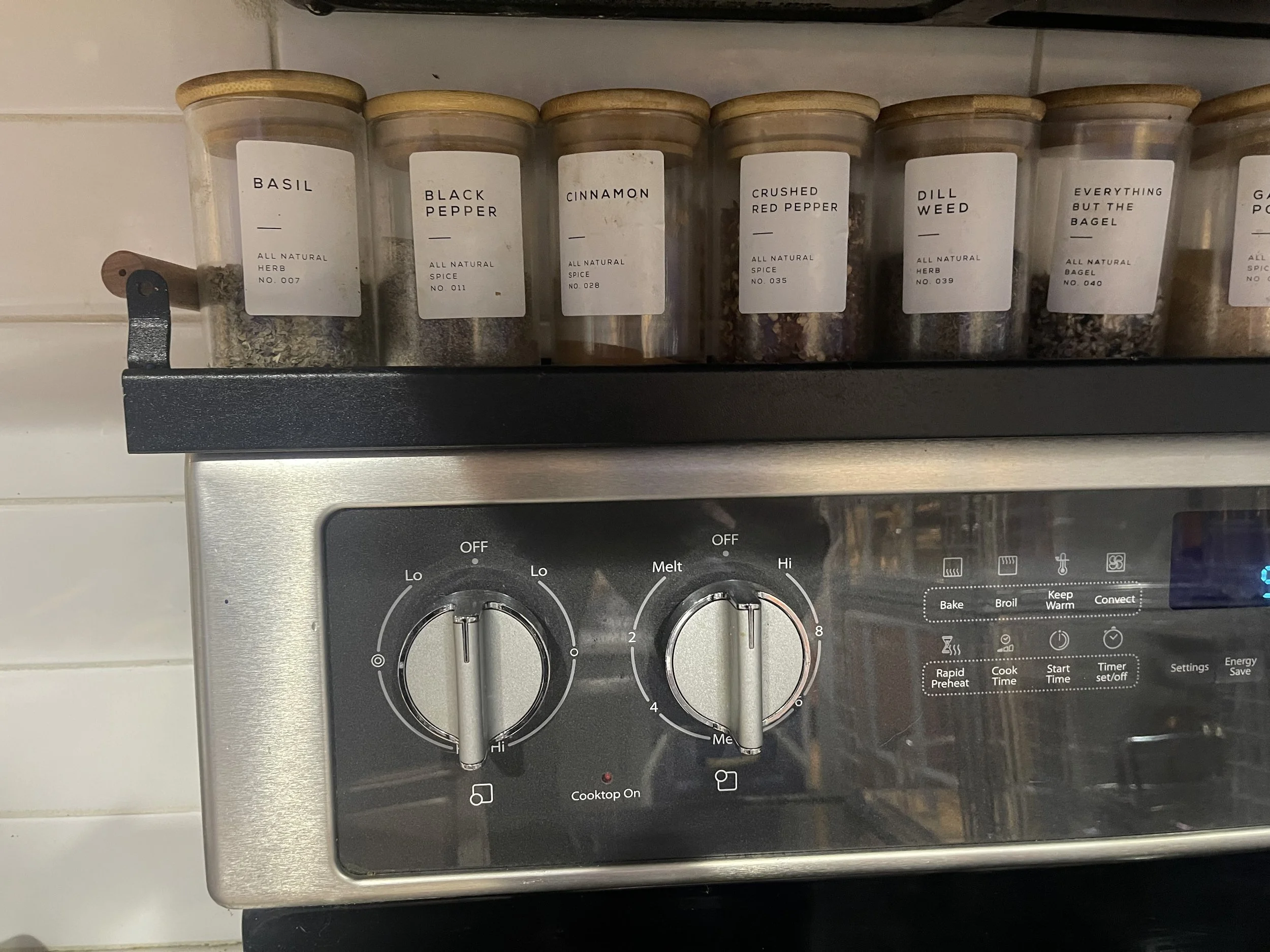
I keep my spices neatly on display, freeing up valuable cabinet space and keeping them close at hand while cooking, all while looking chic and tidy. Who would have thought that the top of your stove was usable space, but it makes total sense.
Pantry
If you’re lucky enough to have a pantry, you know that one large item out of place causes a collapse of the entire ecosystem. Pantries are usually an eyesore, and the kind of willy nilly stacking and storing takes away from the actual functionality of the space. To make pantries easier to navigate and look more streamlined, try decanting your dry goods (think cereals, pastas, pancake mixes) into coordinating storage containers with airtight lids.
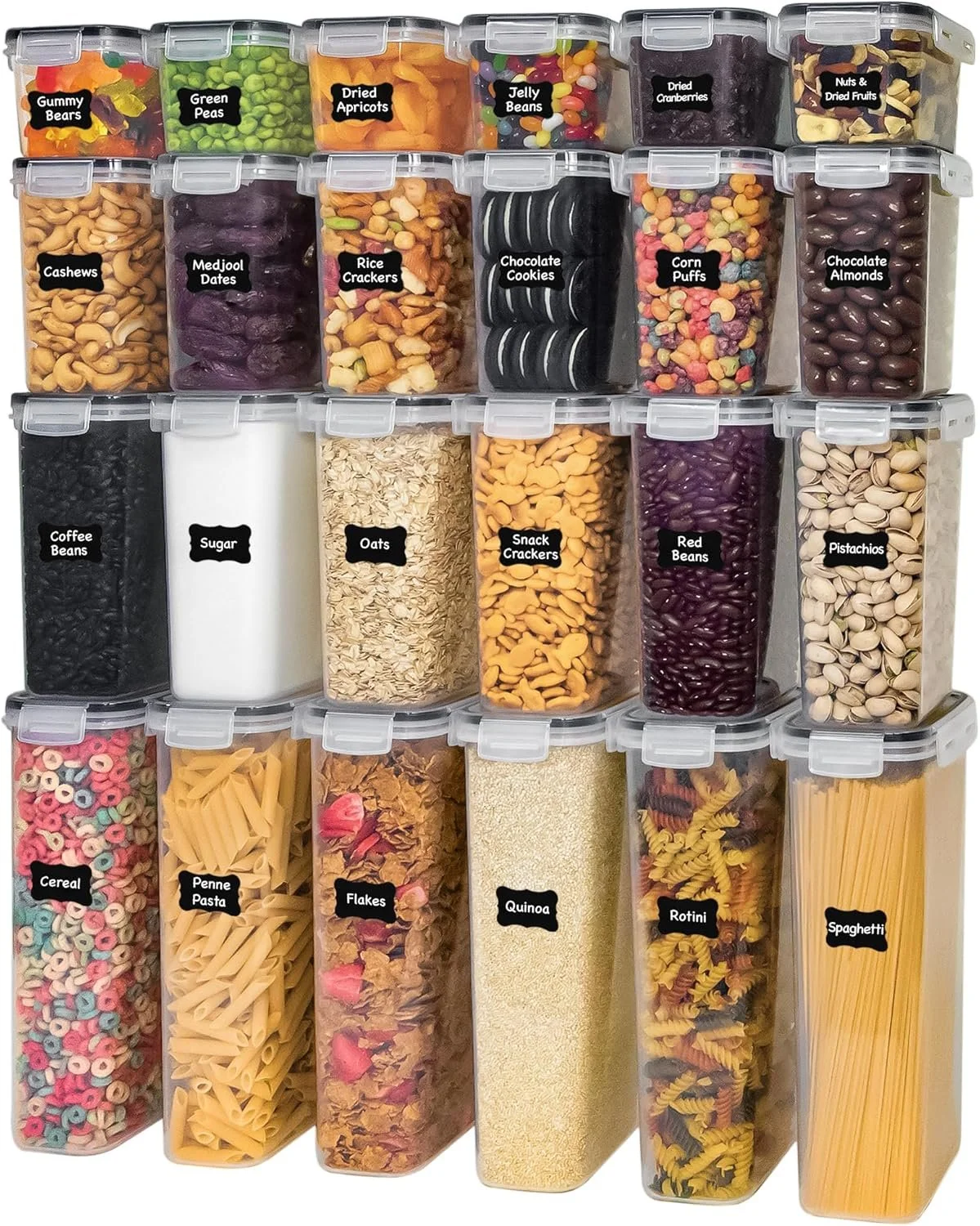
Gone will be the days of crushed spaghetti boxes and stale cereal. Food will be protected and accessible, with the added benefit of clear containers letting you know how much stock is left. Don’t run out of rice, see right away when you’re getting low. This method not only keeps your pantry looking and working like a dream, but I find it helps me keep track of what needs to be ordered when, so I never overorder what I have plenty of, and I don’t run out of what I’m low on.
At the end of the day, this kitchen reset wasn’t about making everything look Pinterest perfect (although I won’t pretend that wasn’t a bonus). It was about creating systems that actually work for the way we live; systems that make daily life easier instead of more frustrating.
The biggest takeaway? You don’t need a bigger kitchen or a full renovation to make a meaningful change. You just need to take an honest look at what you use, how often you use it, and whether your current setup is helping or hindering you. Once those problem areas are clear, the right organization tools become obvious, and that’s where good bins, dividers, and storage solutions quietly do the heavy lifting.
If you’re feeling stuck, overwhelmed, or avoiding your kitchen altogether (been there), start small. One drawer. One cabinet. One zone. The products I’ve linked are the exact ones I used to bring order to my own space, and they made the process smoother, faster, and, dare I say, kind of satisfying.
Your kitchen should support you, not stress you out. And once the behind-the-scenes systems are in place, keeping it tidy feels less like a chore and more like a natural byproduct of a space that finally makes sense. You’ve got this, and your future, calmer self will thank you every time you walk in and don’t immediately “nope” right back out.